Denti in Lecce: tooth chipped or fractured? The solution exists
Denti in Lecce: tooth chipped or fractured? The solution exists
Playing a front tooth is more common than you think. It can happen by eating something hard, following a fall, after a trauma or due to the progressive wear of the enamel. In any case, a splinter or fractured tooth should not be underestimated: in addition to aesthetic discomfort, it can expose tooth, increase sensitivity and, in deeper cases, involve the vitality of the tooth.
The Dr. Nicolò Stefanelli and the Dr. Rosanna Renò of Studio Odontoiatrico Stere di Lecce evaluate each case reconstruction of the front teeth with a conservative approach, modern aesthetic materials and attention to the natural integration of restoration with the patient's smile. If you are looking for a dentist in Lecce for the reconstruction of an incisive or a skewed front tooth, Studio Stere can accompany you with a customized evaluation.

What is composite dental reconstruction
The dental reconstruction is a conservative treatment that allows to restore the shape, size and function of a damaged tooth through selected composite materials to harmonize with color, transparency and characteristics of the natural tooth.
Unlike solutions like dental veneers or crowns, the composite reconstruction is generally performed directly in the studio, often in one session, without resorting to the dental laboratory. It is a conservative solution, especially when the damage is limited and the residual dental structure allows a stable restoration.
The goal is not only aesthetic. A properly planned reconstruction can help protect the tooth, improve the chewing function and reduce the risk that a small fracture evolved into a more complex problem.
When the reconstruction of a front tooth can be indicated
The reconstruction of an incisive or a front tooth can be evaluated in the presence of chips, partial fractures, wear of the enamel, old damaged fillings, front cavities or small spaces between the teeth. Each situation requires a clinical visit, because the depth of the damage and the state of the tooth determine the most suitable treatment.
Skipped tooth
A splinter of enamel or dentine may appear after trauma, bite on a hard food or fall. Even when the damage seems small, it is useful to control it to evaluate sensitivity, sharp margins and stability of the dental structure.
Fracture tooth
When the fracture involves a larger portion of the dental crown, the clinical assesses whether the composite is sufficient or if additional treatments are needed, such as extended protection or endodontic therapy in cases where the pulp is involved.
Old fillings or deteriorated restorations
Opaque, discromic or with visible margins can be replaced after careful evaluation. The new restoration is designed to integrate with the shape and color of the nearby teeth.
Usura, abrasion and small deaxters
Bruxism, acid erosion, abrasion or small spaces between the front teeth can alter the harmony of the smile. In some selected cases, composite reconstruction can help improve proportions and aesthetic continuity without more invasive approaches.
How dental reconstruction takes place in the study
The treatment of reconstruction of the fenced tooth in Lecce at Studio Odontoiatrico Stere follows a precise clinical sequence, built according to the patient's situation.
Clinical and radiographic evaluation
The visit allows to analyze depth of the fracture, vitality of the tooth, state of the pulp, occlusion and presence of any previous caries or restorations. When indicated, radiographic examinations or diagnostic examinations may be performed.
Color selection and restoration design
Before applying the composite, the clinic selects more consistent tone, saturation and transparency with the natural tooth. This passage is essential especially in the front teeth, where light, shape and anatomical details are very visible.
Insulation, adhesion and stratification
The operating field is isolated to facilitate the adhesion of the material. After minimal surface preparation, the composite is applied in progressive and shaped layers to recreate the anatomical shape of the tooth.
Finishing and polishing
At the end of the reconstruction contacts, margins, occlusion and surface of the restoration are checked. The final polishing helps to achieve a more natural look and a simpler surface to maintain with daily hygiene.
The procedure can be concluded in one session, with variable duration according to the extent of damage and the aesthetic complexity of the case.

Composite or dental veneer: which to choose
The choice between composite reconstruction and ceramic dental veneer depends on the extent of damage, aesthetic goals, the amount of residual dental tissue and the overall treatment plan.
When the composite is enough
Composite reconstruction is often indicated for limited and localized damage, such as small chips, worn margins or front restorations to be replaced. It is a direct, repairable and generally more conservative solution.
When a face can be evaluated
Ceramic veneer can be taken into account when aesthetic improvement affects shape, color and proportions in a wider way. It requires specific planning and, in some cases, a preparation of the enamel.
During the visit, Dr. Nicolò Stefanelli evaluates the most suitable solution according to the clinical condition, patient expectations and the possibility to preserve as much as possible the natural structure of the tooth.
How long a composite dental reconstruction can last
The duration of a composite reconstruction varies from patient to patient. It depends on the quality of the material, the technique used, the position of restoration, occlusion, the presence of bruxism and daily habits.
Correct professional dental hygiene, periodic checks and good home hygiene can help maintain stable restoration over time. In case of wear, chipping or chromatic alterations, the composite can often be repaired or replaced with conservative procedures, when clinical conditions allow it.
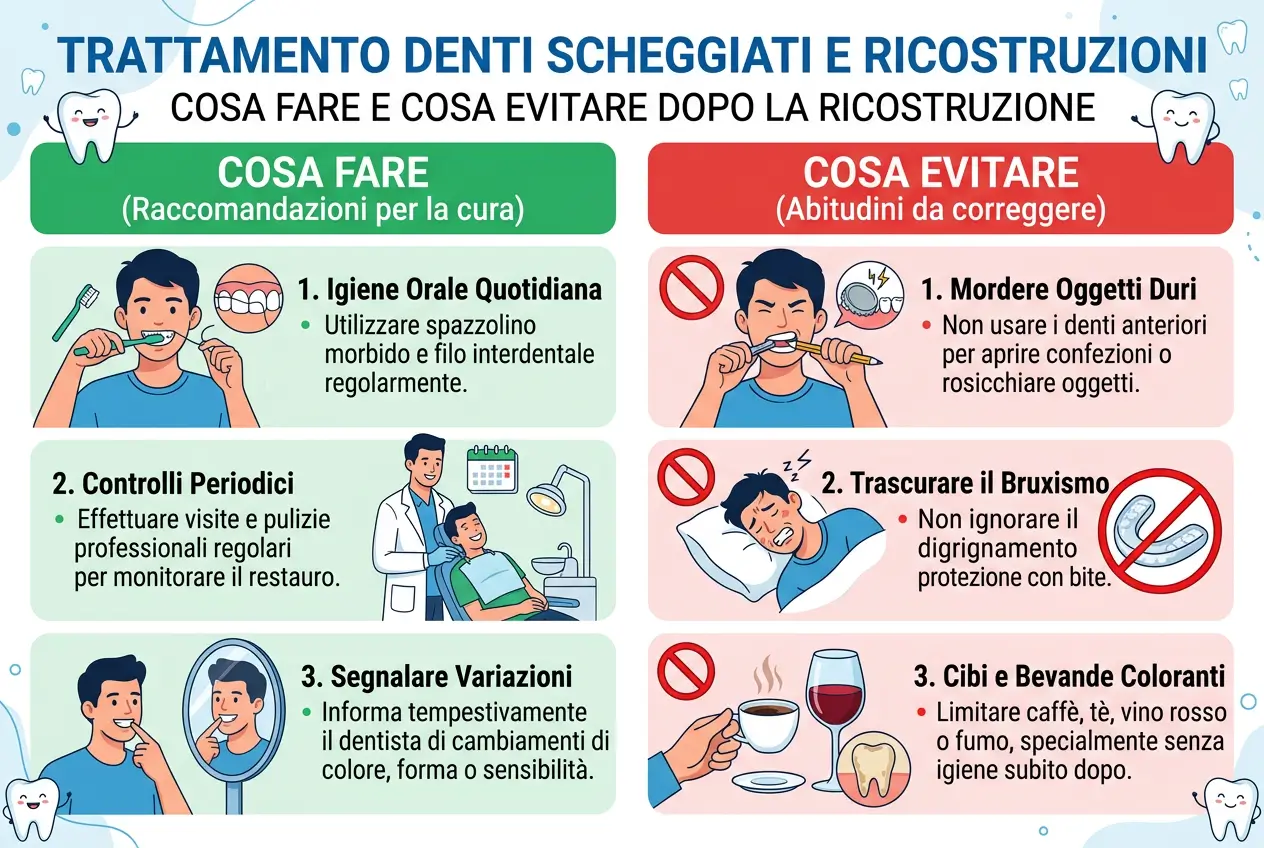
What to do and what to avoid after reconstruction
What to do
After dental reconstruction it is important to maintain proper oral hygiene with toothbrush, floss or instruments indicated by the dentist. They are also useful periodic checks to monitor margins, color, polishing and stability of restoration.
What to avoid
It is advisable to avoid biting hard objects, opening packs with front teeth, gnawing pens or neglecting any signs of bruxism. Frequent consumption of foods and very pigmenting drinks can also affect the appearance of restorations over time, especially if not accompanied by good hygiene.
When to contact the study
It is advisable to book a visit for reconstruction of the teeth before Lecce if a tooth has splintered or fractured, if it appears sensitivity to cold, warm or pressure, if an old filling appears dark or deteriorated, or if you want to improve the aesthetics of irregular, abraded or separated front teeth from small spaces.
A timely evaluation allows us to understand whether the tooth can be treated with a direct reconstruction or if it is necessary to deepen before proceeding.
How dental reconstruction is performed in the Studio Odontoiatrico Stere in Lecce
At the Dental Stere StudyIn Via Giovanni Boccaccio 19 C/D/E in Lecce, the reconstruction of the front teeth is carefully planned for the tooth health, the aesthetics of the smile and the naturalness of the result.
Dr. Nicolò Stefanelli uses conservative techniques and composite materials selected to adapt to the patient's morphology. Each restoration is modeled taking into account color, shape, transparencies and relationship with neighboring teeth, so as to obtain a harmonious result and consistent with the natural smile.

Frequently asked questions
Is the reconstruction of a skewed tooth hurt?
The reconstruction of a skeleton tooth is generally well tolerated. When necessary, it can be performed with local anesthesia. In subsequent days, a slight sensitivity may appear, especially if the tooth was already irritated or the fracture was deeper.
Do you see the composite reconstruction?
In suitable cases, modern composites allow a very natural aesthetic integration. The result depends on the position of the tooth, the extent of the damage, the clinical technique and the chromatic characteristics of the smile.
How long does it take to rebuild a chipped tooth?
In many cases only one session is sufficient, with variable duration according to the extent of the damage and complexity of the restoration. The initial visit serves to define more suitable times and methods.
Can you reconstruct a very fractured tooth?
It depends on the size of the fracture. If the tooth pulp is involved, a tooth pulp may be required devitalization Preliminary. Clinical and radiographic evaluation is essential to establish the most suitable treatment.
At Studio Odontoiatrico Stere you can find a complete range of preventive and curative dental treatments.
If you are looking for a dentist in Lecce for dental prevention, in Salento or Puglia, our team is ready to welcome you with expertise, technology and attention to detail. Learn more about studiostere.it and book your check-up today.
Article written by Dr. Nicolò Stefanelli – Dentistry

Read more important articles here: Blog
Visit the official website: Study Stereo
Come and visit us: Via Giovanni Boccaccio 19 C/D/E – Lecce
Follow us on our social media:
Article written by Dr. Nicolò Stefanelli – Dentistry
Continue reading
Perle dello smalto: piccoli noduli sulla radice da valutare | Studio Odontoiatrico Stere
Allineatore perso o rotto: cosa fare senza modificare il piano | Studio Odontoiatrico Stere
Coronectomia del dente del giudizio: perché a volte si lasciano le radici | Studio Odontoiatrico Stere
Sensibilità dopo un intarsio dentale: quali segnali riferire al dentista | Studio Odontoiatrico Stere