Devitalization in Lecce: what is it, how it works and when it is necessary
Devitalization in Lecce: what is it, how it works and when it is necessary
There is a dental procedure that many still fear today, often without reason, and which represents one of the most effective and conservative solutions of modern dentistry: devitalization. This treatment allows, when clinical conditions allow it, to save a severely compromised tooth, reduce pain and preserve the chewing function, avoiding extraction.
Fear of devitalization is often linked to past experiences, stories handed down or a perception of treatment not updated to current techniques and technologies. Today, the devitalization performed with modern instrumentation is a precise procedure, generally well tolerated and aimed at preserving the natural tooth.
I do. Studio Odontoiatrico Stere di Lecce, guided by Dr. Nicolò Stefanelli and from Dr. Rosanna Renò, performs endodontic treatments with precision rotary instrumentation and updated clinical protocols, with a careful approach to safety, therapeutic effectiveness and patient comfort. The study is located in Via Giovanni Boccaccio 19 C/D/E in Lecce and is a reference point for the devitalization in Salento and in Puglia.

What is devitalization
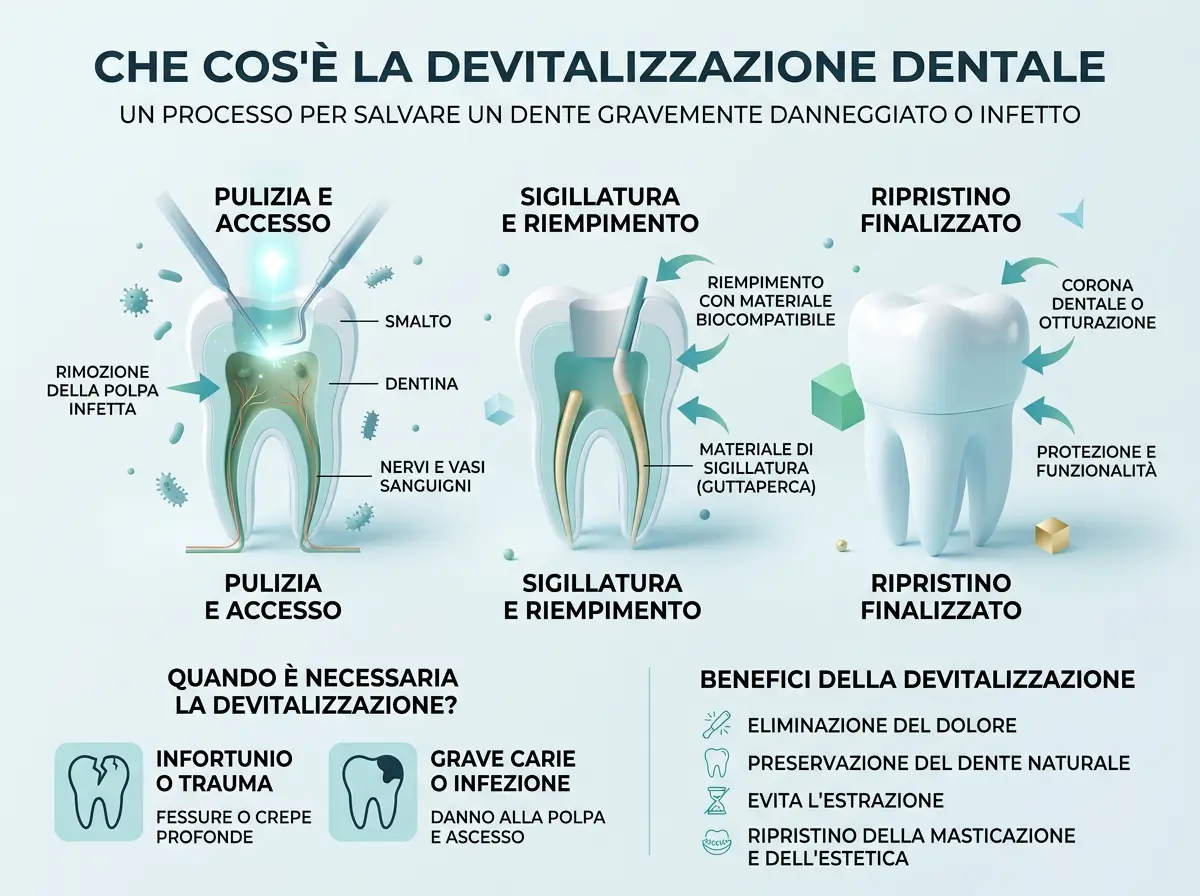
Devitalization, a term commonly used to indicate endodontic treatment or cancer treatment, is a clinical procedure that consists of removing the dental pulp compromised by the inside of the tooth, accurate disinfection of radicular channels and their sealing with biocompatible materials.
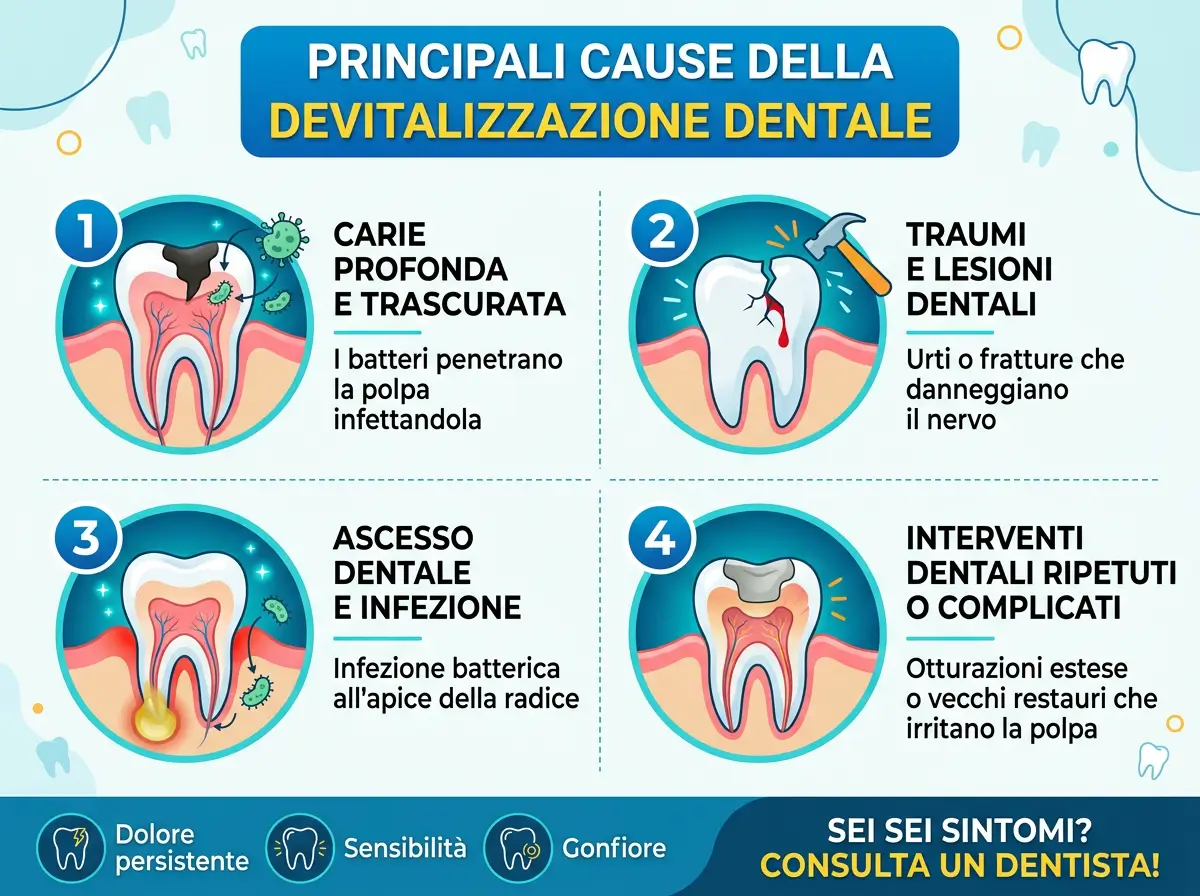
Dental pulp is the living tissue present within the tooth and consists of blood vessels, nerve endings and connective cells. When the pulp infects or inflames irreversiblely — due to deep caries, trauma, fracture or advanced periodontial disease — it is no longer possible to recover it with simple conservative therapies. In these cases, devitalization can prevent tooth extraction.
The term "devitalization" comes from the fact that the tooth, deprived of the pulp, loses its internal biological vitality: the nerve endings no longer transmit stimuli and the blood vessels no longer break the pulp tissue. However, the tooth remains structurally present, anchored to the bone through the parodontal and functional ligament to chewing, if properly restored and controlled over time.
When devitalization is required
The devitalization is indicated when the dental pulp is irreversibly compromised. The most common clinical situations that may require an endodontic treatment include different well defined conditions.
Deep loads with pulping involvement
When an untreated caries reaches the pulp chamber, bacteria can colonize the pulp causing inflammation and infection. Pain can become spontaneous, button and persistent even after removal of the stimulus. In these cases, devitalization is often the treatment indicated to preserve the tooth.
Unreversible pulse
The irreversible pulpitis is an advanced stage of pulpal inflammation in which tissues are no longer able to heal spontaneously. Pain can be intense, prolonged and sometimes more evident during the night. Without treatment, the pulp can meet necrosis.
Necrosis pulpit
When the pulp is already necrotic, the tooth may seem asymptomatic for a period, but the infection may spread towards the periapical tissues causing granuloma, cyst or abscess. Devitalization may also be necessary in the absence of pain, when clinical and radiographic evaluation highlights an infection.
Dental abscess
Dental abscess is a collection of pus caused by bacterial infection. In many cases it requires the endodontic treatment of the responsible tooth, possibly associated with other therapies indicated by the dentist according to the clinical situation.
Dental trauma
A trauma to the tooth — a fall, a hit or an accident — can damage the pulp even without a visible fracture of the crown. In these cases, devitalization can also be necessary at a distance of time from trauma.
Preparation for crowns or prostheses
In some clinical situations, the dentist may assess the devitalization of a tooth in preparation for prosthetic treatment, when the risk of subsequent pulpit complications is high or when the tooth condition makes it necessary.
How the devitalization takes place at Studio Stere
The endodontic treatment at the Studio Odontoiatrico Stere di Lecce is articulated in precise stages, performed with modern instrumentation and updated clinical protocols. Before starting the procedure, the tooth and surrounding tissues are anesthetized locally, so as to make the treatment as comfortable as possible during execution. The tooth is then isolated from the rest of the mouth by means of a rubber dam, useful to maintain a clean operating field and to reduce the risk of bacterial contamination.
Subsequently, access to the pulping chamber through the tooth crown is created using precision instrumentation. The infected or necrotic pulp is removed from the pulp chamber and from the radicular channels through dedicated endodontic instruments. The radicular channels are then shaped, enlarged and disinfected with specific irrigation solutions, with the aim of reducing the bacterial charge and preparing the tooth for the final closure.
At the end of the disinfection phase, clean and shaped channels are sealed with biocompatible materials, usually guttaperca and endodontic cement, to reduce the risk of bacterial recontamination. The tooth is finally restored with a definitive filling in composite or, in more complex cases, with a ceramic crown or zirconium, so as to protect the weakened dental structure.
Devitalization: Does it really hurt?
This is one of the most frequently asked questions before undergoing treatment. Generally, if performed with modern techniques and with adequate anesthesia, devitalization should not cause pain during the procedure.
Fear is understandable: often the tooth hurts before treatment and the association between pain and dental practice can be rooted. However, it is important to distinguish between pain caused by pathology — that can be very intense — and the treatment itself, which is performed with local anesthesia.
In the days following the devitalization it is possible to feel a slight sensitivity to the pressure in the treated area, which tends to shrink gradually. In most cases, the discomfort is handled by following the directions provided by the dentist.
How long a dente devitalized
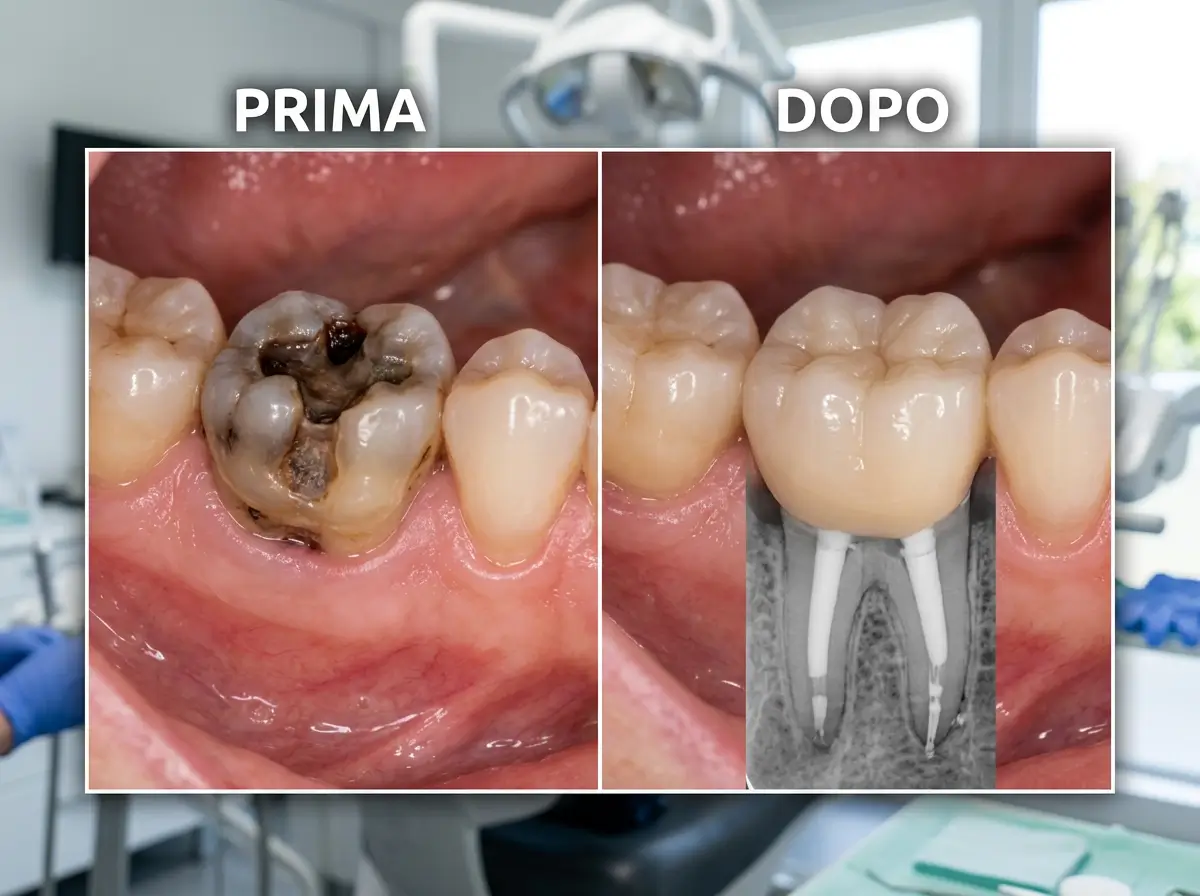
A properly treated, restored and controlled tooth can last many years. Longevity depends on several factors: quality of endodontic treatment, precision of the canalar seal, type of restoration, oral home hygiene, periodic controls and periodontal conditions of the patient.
Accurate cleanliness and sealing of radicular channels help reduce the risk of bacterial recontamination and promote the stability of the result over time. The type of restoration significantly affects the duration: a devitalized tooth can be more fragile than a life tooth and protection with a ceramic or zirconium crown can be recommended especially for the back teeth, subject to intense chewing forces.
Also the daily care of the devitalized teeth is as fundamental as that of the vital teeth, because the tooth can still develop secondary caries or periodontal problems if it is not properly maintained.
Devitalization or extraction: what to choose?
When a tooth is severely compromised, many patients wonder whether it is better to detach it or extract it. In most cases, when clinical conditions allow it, the goal of the dentist is to preserve the natural tooth through endodontic treatment.
Store the natural tooth, when possible, allows to maintain the alveolar bone below, preserve the chewing function, avoid displacement of adjacent teeth and reduce the need for immediate prosthetic replacement. Extraction is taken into account when the tooth is no longer recoverable clinically, for example in case of excessive bone loss, radicular vertical fracture or advanced radicular reabsorption.
You can learn more about the missing tooth replacement options on the page dedicated toimplantology in Lecce.
What to avoid after devitalization
It is important not to postpone the treatment hoping that the pain passes alone: an infected or necrotic pulp does not heal spontaneously and the infection can progress towards the periapical tissues. It is equally important not to take antibiotics without prescription as an alternative to devitalization, because antibiotics can temporarily reduce some symptoms but do not eliminate the endodontic cause of the infection.
It is not advisable to choose the extraction without having first evaluated the possibility of storing the tooth, when clinically recoverable. Finally, it should not be neglected the definitive restoration after the devitalization: a devitalized tooth not properly protected can be more vulnerable to fractures and secondary caries.
Devitalization in Lecce: why choose Studio Stere
I do. Dental Stere Study is located in Via Giovanni Boccaccio 19 C/D/E in Lecce and is a reference point in Salento and throughout Puglia for endodontic treatments. The Dr. Nicolò Stefanelli and the Dr. Rosanna Renò perform devitalizations with precision rotary instrumentation, updated disinfection protocols and biocompatible materials, with the aim of treating the infection, preserving the natural tooth and restoring comfort and chewing function.
You can explore the other treatments available in the study by visiting the pages dedicated to Sudden toothache in Lecce, care of dental caries in Lecce, atimplantology in Lecce and thedental hygiene in Lecce. For information and reservations: Scholarship. it.
Frequently Asked Questions about Deviation in Lecce
Does devitalization hurt?
Generally not, if performed with appropriate local anesthesia. During the procedure the tooth is anesthetized. In the following days, a slight sensitivity to the pressure can be handled according to the indications of the dentist.
How many sessions are needed for detachment?
In most cases one or two sessions are sufficient. The most complex cases, such as particularly curved channels or endodontic reprocessing, may require more appointments.
Does a devitalized tooth change color?
Over time, a devitalized tooth can darken slightly for internal modifications of the dental tissue. This alteration can be evaluated and treated, when indicated, with an internal whitening or with an aesthetic prosthetic solution.
Can I eat after a detour?
Yes, but it is advisable to avoid hard foods and not chew on the treated side in the next days, especially if the final restoration has not yet been completed.
Is devitalization definitive?
Endodontic treatment generally has good success rates when performed correctly and followed by proper restoration. In some cases, an endodontic reprocessing or periapical surgery may be necessary if the infection persists or relapses.
How much does a devitalization cost in Lecce?
The cost depends on the number of radicular channels and the complexity of the case. During the first visit to the Studio Stere, a detailed and personalized quote is provided. For information: Scholarship. it.
At Studio Odontoiatrico Stere you can find a complete range of preventive and curative dental treatments.
If you are looking for a dentist in Lecce for dental prevention, in Salento or Puglia, our team is ready to welcome you with expertise, technology and attention to detail. Learn more about studiostere.it and book your check-up today.
Article written by Dr. Nicolò Stefanelli – Dentistry

Read more important articles here: Blog
Visit the official website: Study Stereo
Come and visit us: Via Giovanni Boccaccio 19 C/D/E – Lecce
Follow us on our social media:
Article written by Dr. Nicolò Stefanelli – Dentistry
Continue reading
Conoid lateral incisive: how to assess shape, space and restoration | Dentistry study Stere
Pulpotomy in the adult permanent tooth: when to store part of the pulp | Dentistry study Stere
Tooth moved after a shock: because lust requires an urgent visit | Dentistry study Stere
Odontoma: when an obstacle prevents a tooth from popping | Dentistry study Stere