Black or dark tooth in Lecce: causes, trauma, caries and possible solutions
Black or dark tooth in Lecce: causes, trauma, caries and possible solutions
A black tooth, gray, brown or darker than others can create immediate concern. Often the patient sees it in the mirror, during a photograph or while he notices a dark spot on a front or rear tooth. In some cases the color change is slow and progressive, in others it appears after a trauma, a caries, an old filling or a previous dental treatment.
At the Studio Odontoiatrico Stere di Lecce, Dr. Nicolò Stefanelli and the Dr. Rosanna Renò evaluate the dark tooth starting from a careful diagnosis, because not all discromies have the same origin. A darker tooth can only be an aesthetic problem, but it can also indicate caries, infiltration, dental trauma, pulp suffering or deep pigmentation.
Talk about black tooth in Lecce means addressing a topic very sought after by patients, especially when doubts appear as "why does a tooth become dark?", "a black spot on the tooth is carious?", "a devitalized tooth can change color?" or "when should I go to the dentist?" The correct answer always depends on the cause, the location of the stain, the history of the tooth and the presence of symptoms.
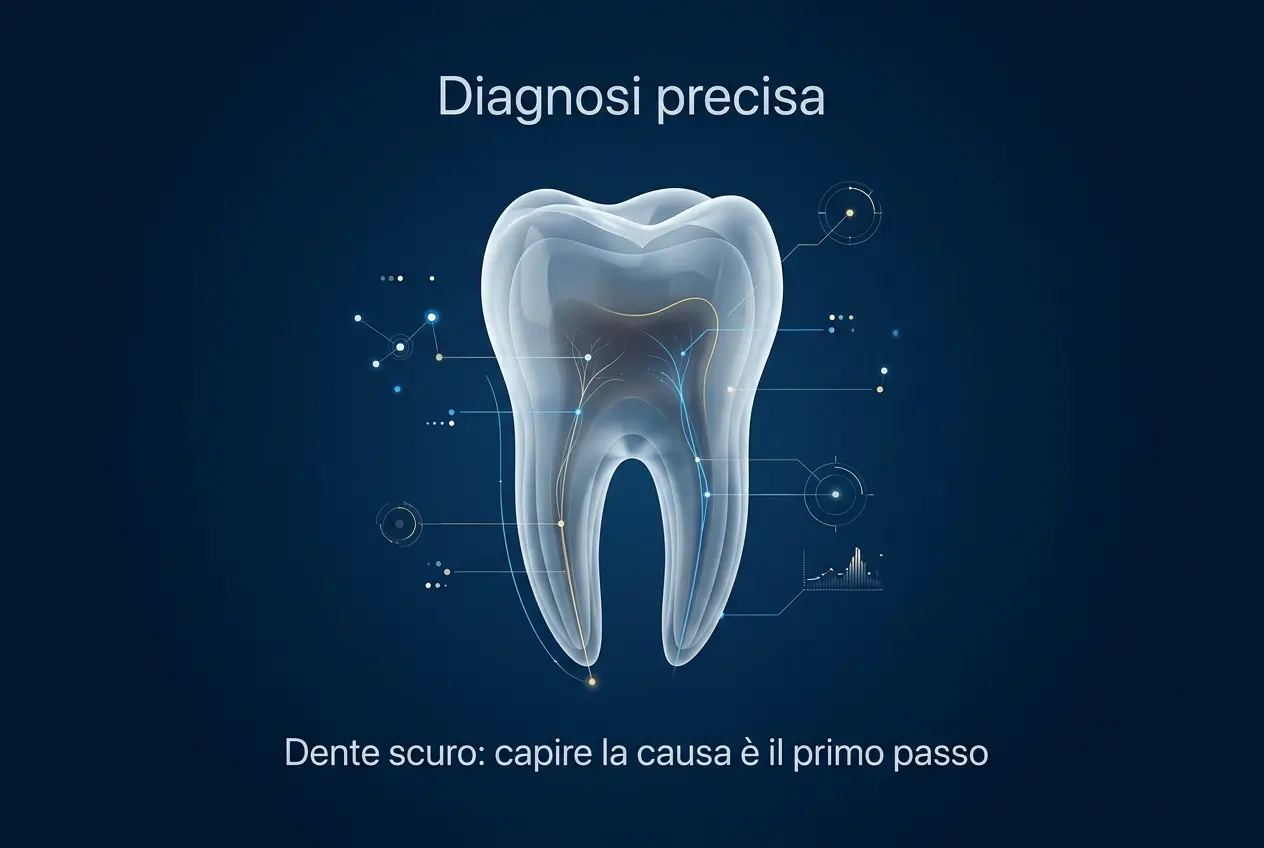
What it means to have a black or dark tooth
The color of the teeth can change for different reasons. Some alterations affect only the external surface of the enamel, others arise from the inside of the tooth. This distinction is important, because a superficial stain can be handled differently than a tooth that darkens for trauma, deep caries or alterations of the dental pulp.
A dark tooth may appear grey, intense yellow, brown, black or more matte than others. Sometimes change affects the whole tooth, especially in the front teeth. Other times it looks like a small black spot, a dark spot between two teeth, a line near the gum or a pigmented area inside an old reconstruction.
The dental evaluation serves to understand whether the color depends on external pigmentation, tartar, caries, old fillings, wear of the enamel, trauma, devitalization or deeper problems. Looking at the tooth in the mirror can give an indication, but it does not allow to distinguish with confidence a simple stain from a charitable injury or an internal suffering.
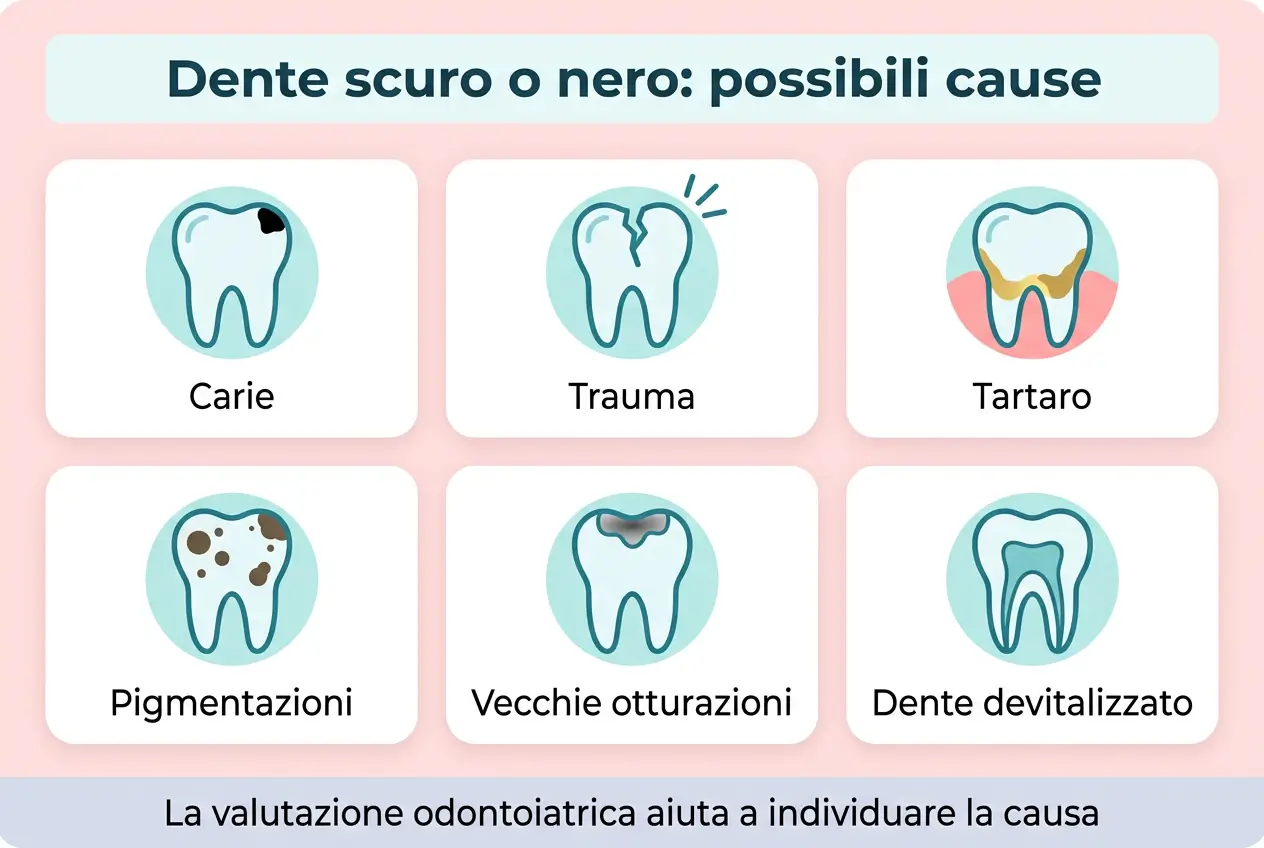
Most common causes of a black or dark tooth
One of the most frequent causes is Dental decay. In the early stages, the caries can appear as a white matte or marroncin area; with time, if it progresses, it can become darker and create a black area or a real hole in the tooth. Not always caries hurt immediately, and that's why a black stain should not be underestimated.
Another common cause is external pigmentation. Coffee, tea, smoke, red wine, some colored drinks and unsuitable cleaning can favor superficial spots. In these cases, the color can accumulate in the roughest areas of the enamel, between the teeth, near the gum or around old fillings.
Dark tooth after trauma
A tooth can become dark after a hit, a fall or a sports trauma. Color change can appear immediately or after days, weeks or months. In these cases the dentist must assess the vitality of the tooth, the presence of pain, possible fractures and the state of the root. Although the pain is absent, a tooth that changes color after a trauma deserves attention.
Dark devitalized tooth
A dente already devitalized can become darker over time. This may depend on internal modifications of the tooth, old materials, infiltration, loss of translucency or non-suitable restorations. The solution is not always the same: in some cases you can evaluate an internal whitening, in others an aesthetic reconstruction, a crown or a different conservative path.
Old fillings and infiltration
An old filling can darken, consume or infiltrate. The patient may notice a black line on the edge of the restoration, a dark spot near the reconstruction or a change of color of the tooth. In these cases it is necessary to understand whether it is only superficial pigment or if under the old restoration there is a secondary caries.
Dark tartar near the gum
The tartar can take on a yellow, brown or dark color, especially if it stays long near the gum or between the teeth. Sometimes the patient thinks he has a spot on the tooth, but it is actually a mineralized deposit. In these cases professional dental hygiene allows you to remove the tartar and evaluate the actual state of the enamel below.
Black tit on the tooth: is he always charitable?
No, a black spot on the tooth is not always caries. It can be a superficial pigmentation, tartar, an old filling, a line of infiltration or an alteration of the enamel. However, it can also be an initial or advanced caries. For this reason, the color alone is not enough to make diagnosis.
A dark spot should be controlled especially if it increases in size, if the tooth becomes sensitive, if the flos always breaks at the same point, if you frame food or if a small hole is present. These signals may indicate a loss of dental structure or a caries to be treated.
At Studio Odontoiatrico Stere, the evaluation allows you to observe the surface of the tooth, check the margins of the old fillings and, when necessary, use diagnostic tests to understand whether the stain involves only the enamel or even the deeper layers.
Dark tooth and pain: when to worry
A dark tooth without pain can still require a visit. The absence of discomfort does not always mean lack of problem. Some caries progress slowly and become painful only when they reach deeper areas. Similarly, a traumatic tooth can change color without giving immediate pain.
It is important to contact the dentist if the dark tooth is associated with spontaneous pain, sensitivity to heat or cold, discomfort to chewing, gum swollen, bad taste, dental mobility or presence of pus. These signals can indicate a condition to be deepened with promptness.
Black tooth that doesn't hurt
If a tooth is black or dark but does not hurt, the visit remains useful. It could be external pigmentation, but also silent caries, old infiltrated restoration or internal change. The dentist can distinguish the causes and indicate whether it serves treatment, monitoring or simple professional hygiene.
Dark tooth after a bang
After a trauma, the tooth can darken because the internal tissues suffered damage. In permanent teeth, this signal should be carefully evaluated, especially if the color changes progressively. The control allows to verify whether the tooth is vital, if there are fractures and if it is necessary to intervene.
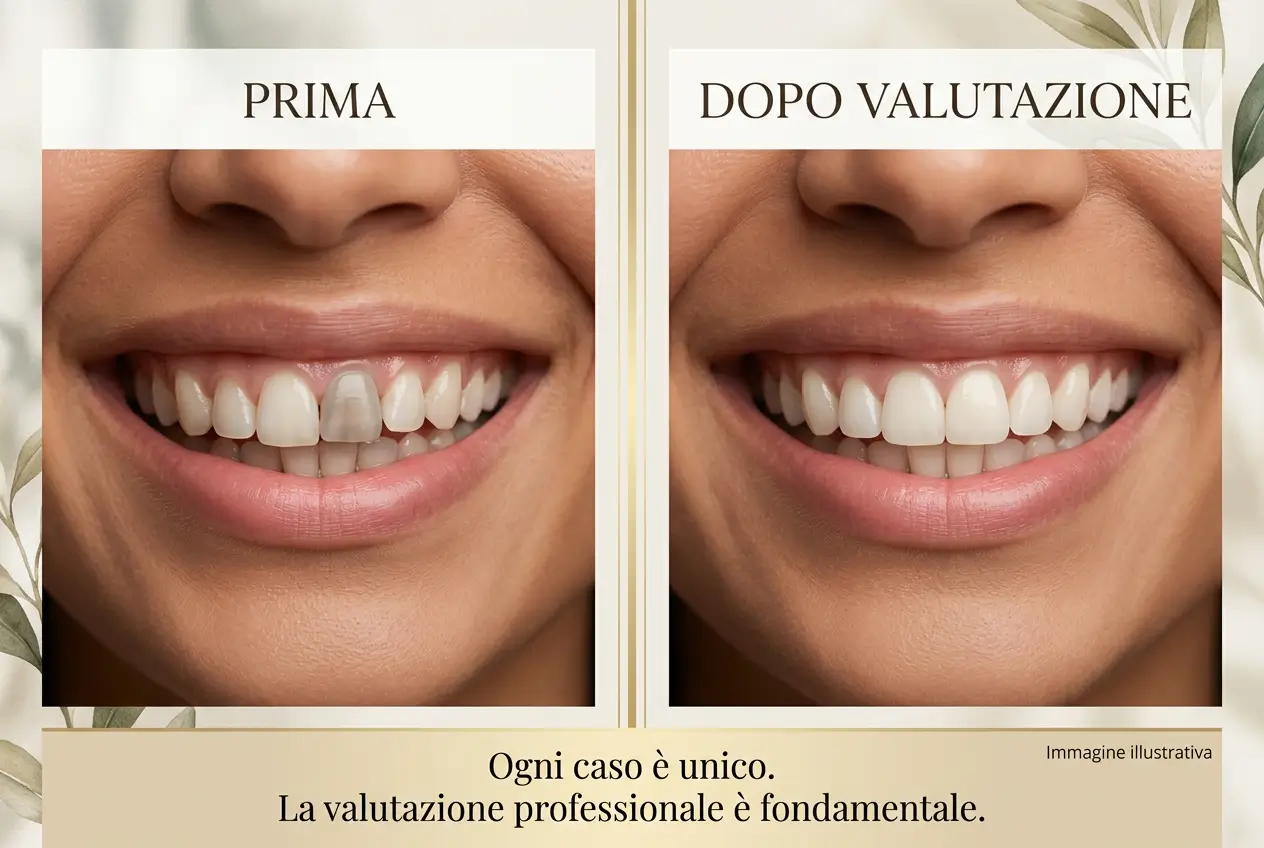
How a black or dark tooth is diagnosed
The diagnosis starts from listening to the patient. The dentist has asked how long the tooth is dark, if the color has changed rapidly, if there has been a trauma, if the tooth has been devitalized, if there are old fillings or if the patient feels pain, sensitivity or discomfort to chewing.
During the visit are observed color, shape, surface of the tooth, presence of caries, tartar, pigmentations, fractures, restorations and gums. When necessary, you can use photographs, sensitivity tests, X-rays or digital tools to investigate the case.
In more complex cases, the3D diagnostic imaging can be evaluated to better understand the root situation, bone and surrounding structures. It does not always need an advanced examination, but when indicated it can help to plan treatment with greater precision.
Why not just look at the color
Due denti scuri possono avere cause completamente diverse. Uno può essere macchiato superficialmente, un altro può avere una carie, un altro ancora può essere stato colpito da un trauma o essere già devitalizzato. Per questo la diagnosi non deve basarsi solo sull’estetica, ma sulla valutazione clinica completa.
Possibili trattamenti per un dente nero o scuro
Il trattamento dipende dalla causa. Se il colore scuro è dovuto a pigmentazioni superficiali o tartaro, può essere indicata una seduta di professional dental hygiene, con rimozione dei depositi e lucidatura. Questo può migliorare l’aspetto del sorriso, ma soprattutto permette di valutare il dente pulito e distinguere macchie esterne da problemi più profondi.
Se la macchia è causata da carie, può essere necessario un trattamento di Conservative dentistry, con rimozione del tessuto cariato e ricostruzione del dente. Quando la carie è profonda e coinvolge la polpa, il dentista può valutare una devitalization, sempre dopo diagnosi.
Se il dente è scuro per motivi estetici e la struttura è sana, possono essere valutati trattamenti come tooth whitening, sbiancamento interno per denti devitalizzati, ricostruzioni estetiche in composito o dental veneers. La scelta dipende da profondità della discromia, posizione del dente, aspettative del paziente e salute orale generale.
Quando può bastare l’igiene professionale
Se il colore scuro dipende da tartaro o pigmentazioni esterne, l’igiene professionale può essere il primo passo. Dopo la rimozione dei depositi, il dentista valuta se il dente è sano o se sono presenti carie, infiltrazioni o altri problemi.
Quando serve una ricostruzione
Se il dente ha perso struttura a causa di carie, frattura o vecchio restauro, può essere necessaria una ricostruzione. L’obiettivo è recuperare forma, funzione ed estetica, rispettando il più possibile la struttura dentale residua.
Quando può servire una devitalizzazione
Quando la carie o il trauma coinvolgono la polpa dentale, il trattamento può diventare più complesso. La devitalizzazione viene valutata solo quando indicata, dopo visita e diagnosi, e serve a trattare l’interno del dente quando la polpa è infiammata o compromessa.

Cosa evitare se un dente diventa nero
Se un dente diventa nero o scuro, è importante evitare rimedi fai-da-te aggressivi. Bicarbonato usato in modo scorretto, limone, prodotti abrasivi, kit sbiancanti non controllati o soluzioni trovate online possono irritare gengive e smalto, aumentare la sensibilità o peggiorare il contrasto cromatico.
È da evitare anche l’idea di fare subito uno sbiancamento senza visita. Lo sbiancamento non risolve carie, fratture, infiltrazioni o problemi interni del dente. Prima bisogna capire se il dente è sano, se la discromia è superficiale o profonda e se esistono controindicazioni.
Un altro errore comune è aspettare perché “non fa male”. Un dente scuro può essere silenzioso per molto tempo. La visita permette di capire se si tratta di una semplice pigmentazione o se c’è una condizione da trattare prima che diventi più complessa.
Prevenzione delle macchie scure sui denti
La prevenzione passa da igiene orale domiciliare corretta, controlli periodici e sedute di igiene professionale. Spazzolare i denti con tecnica adeguata, usare filo interdentale o scovolini quando indicati e limitare la frequenza di zuccheri e bevande acide aiuta a proteggere smalto e gengive.
Chi consuma spesso caffè, tè, vino rosso o fuma può essere più soggetto a pigmentazioni superficiali. In questi casi, l’igiene professionale periodica può aiutare a mantenere il sorriso più pulito e a controllare eventuali zone dove le macchie tendono ad accumularsi.
La prevenzione riguarda anche i vecchi restauri. Otturazioni, ricostruzioni e corone devono essere controllate nel tempo, perché margini non più precisi, infiltrazioni o usura possono favorire cambiamenti di colore, accumulo di placca e carie secondarie.
Dente nero nei bambini e negli adolescenti
Anche nei bambini può comparire un dente scuro, spesso dopo una caduta o un trauma. Nei denti da latte, il cambiamento di colore deve essere valutato dal dentista pediatrico, perché può essere temporaneo oppure associato a problemi interni del dente. Non bisogna decidere da soli se attendere o intervenire.
Negli adolescenti, invece, le macchie scure possono dipendere da carie, pigmentazioni, igiene non adeguata durante trattamenti ortodontici o vecchie lesioni non controllate. Anche in questa fascia d’età è importante distinguere tra problema estetico e condizione clinica.
Presso lo Studio Odontoiatrico Stere, l’pediatric dentistry aiuta bambini e famiglie a comprendere cosa osservare, quando prenotare una visita e come prevenire carie, traumi e alterazioni dello smalto con un approccio adatto all’età.
How does the Studio Odontoiatrico Stere work in Lecce
At the Dental Stere Study, located in Via Giovanni Boccaccio 19 C/D/E in Lecce, la valutazione di un dente nero o scuro viene eseguita con attenzione clinica e comunicazione chiara. Il paziente viene ascoltato, il dente viene osservato e il percorso viene spiegato in modo comprensibile.
Il team valuta se il problema riguarda la superficie del dente, una carie, un vecchio restauro, una devitalizzazione, un trauma o una discromia interna. Quando indicato, le tecnologie digitali possono aiutare a documentare il caso, controllare l’evoluzione e pianificare eventuali trattamenti conservativi o estetici.
Lo Studio Stere accoglie pazienti di Lecce, del Salento e della Puglia che cercano un dentista per dente nero, dente scuro, macchia nera sul dente, carie, devitalizzazione, sbiancamento dentale o estetica del sorriso. L’obiettivo è proporre un percorso prudente, personalizzato e coerente con la salute orale nel tempo.
Domande frequenti sul dente nero o scuro
Un dente nero è sempre cariato?
No. Può dipendere da carie, tartaro, pigmentazioni, trauma, vecchie otturazioni o devitalizzazione. Serve una visita odontoiatrica per capire la causa.
Una macchia nera sul dente può essere solo pigmento?
Sì, può essere una pigmentazione superficiale, ma può anche nascondere carie o infiltrazioni. La valutazione del dentista permette di distinguere le situazioni.
Un dente scuro dopo un trauma deve essere controllato?
Sì. Anche se non fa male, un dente che cambia colore dopo una botta dovrebbe essere valutato per controllare vitalità, radice e tessuti circostanti.
Lo sbiancamento risolve un dente nero?
Non sempre. Prima bisogna capire la causa. Se il dente è cariato, infiltrato o compromesso internamente, lo sbiancamento non è la prima soluzione.
Un dente devitalizzato può diventare scuro?
Sì, può accadere. In base al caso, il dentista può valutare sbiancamento interno, ricostruzione, corona o altre soluzioni conservative ed estetiche.
Dove valutare un dente nero a Lecce?
Presso lo Studio Odontoiatrico Stere, in Via Giovanni Boccaccio 19 C/D/E a Lecce, è possibile prenotare una valutazione per dente nero, macchia scura o discromia dentale.
At Studio Odontoiatrico Stere you can find a complete range of preventive and curative dental treatments.
If you are looking for a dentist in Lecce for dental prevention, in Salento or Puglia, our team is ready to welcome you with expertise, technology and attention to detail. Learn more about studiostere.it and book your check-up today.
Article written by Dr. Nicolò Stefanelli – Dentistry

Read more important articles here: Blog
Visit the official website: Study Stereo
Come and visit us: Via Giovanni Boccaccio 19 C/D/E – Lecce
Follow us on our social media:
Article written by Dr. Nicolò Stefanelli – Dentistry
Continue reading
Dentiera rotta: rimedi da evitare prima della valutazione | Studio Odontoiatrico Stere
Sports bite and mouthguards: differences and why they are not interchangeable | Dentistry study Stere
Tattoo from amalgam: how to evaluate a gray spot in the mouth | Dentistry study Stere
Twin teeth and melted: because a tooth can look double | Dentistry study Stere