Dens invaginatus: what is the tooth in the tooth and when to control it | Dentistry study Stere
Dens invaginatus: what is the tooth in the tooth and when to control it | Dentistry study Stere
A tooth may seem normal outside and have an unusual internal structure. It is the case of dens invaginatus, also called "dens in tooth": an anomaly of formation that creates a fold of the tissues inside the tooth.
The expression "looking in the tooth" describes the appearance that can appear in X-ray. It does not mean that a second tooth is growing inside the first, nor automatically indicates an infection or the need to detach.
The useful passage is to understand where the invagination comes and if the pulp is healthy. A dental evaluation allows to distinguish a repertoire to be protected and controlled by a situation requiring specific care.
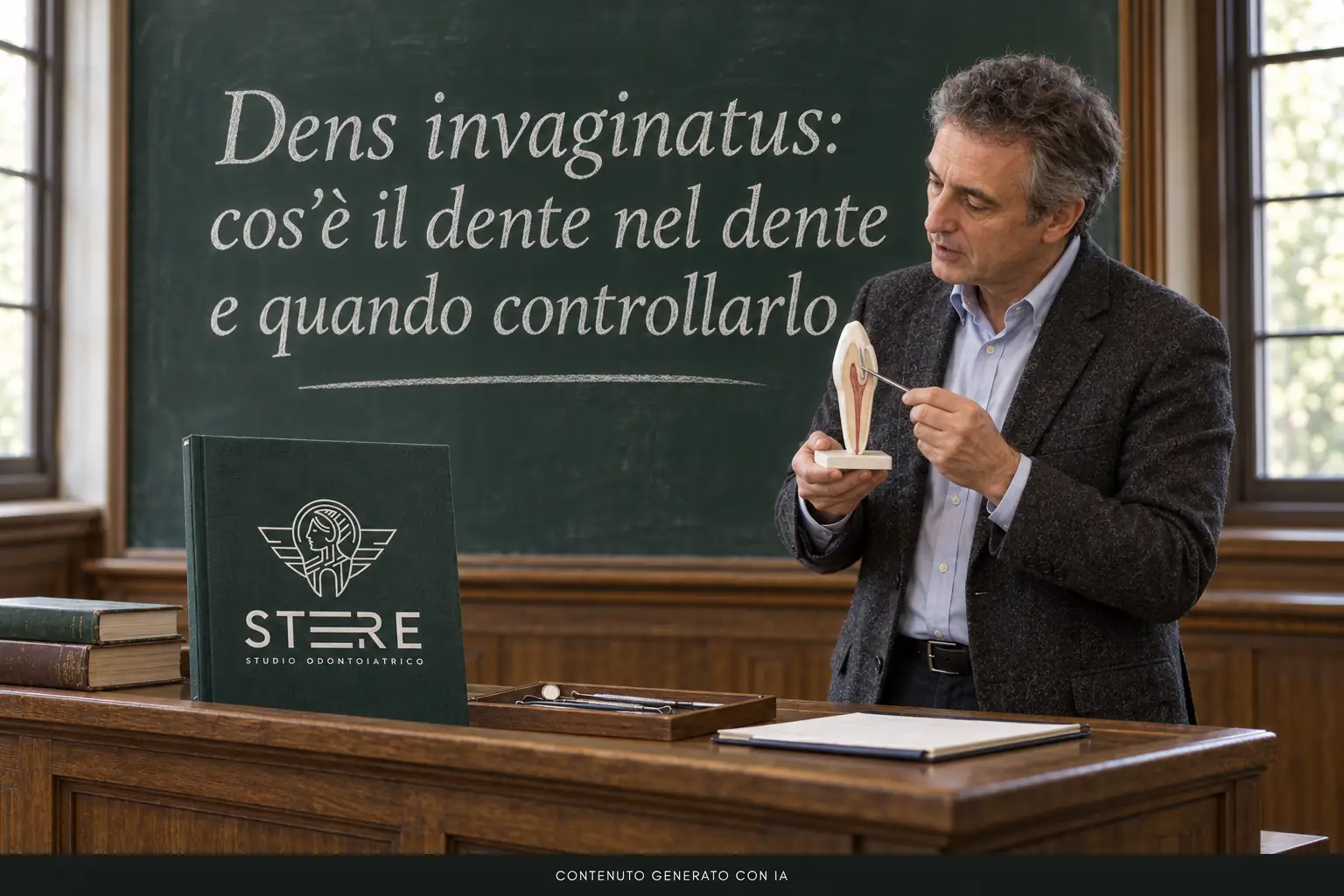
What is dens invaginatus
During the development of the tooth, part of the tissues that form enamel and dentine folds inward. The resulting cavity can remain in the crown or extend into the root, with variable relationships with the pulp. The upper lateral incisors are frequently interested, but the external aspect does not allow to predict all anatomy.
The clinical review published in the British Dental Journal explains why early recognition and protection of vulnerable areas can play a role in tooth preservation.
How to shape and what factors count
A change in development
Dens invaginatus is formed while the tooth develops. It is not created by the toothbrush, the use of a device or a food consumed after the eruption.
A cause not always identifiable
Several explanations have been proposed, but there is no single cause demonstrated for all cases. It is not correct to automatically attribute it to a trauma or parental error.
A possible access from the surface
When invagination communicates with the mouth, it can retain residues and microorganisms in a difficult area to cleanse. The accuracy of cleaning is important, but does not change the anatomy already formed.
Different relationships with pulp
Depth, coating and proximity to the pulp influence the risk. Two teeth with a small similar shaft can therefore require different decisions.
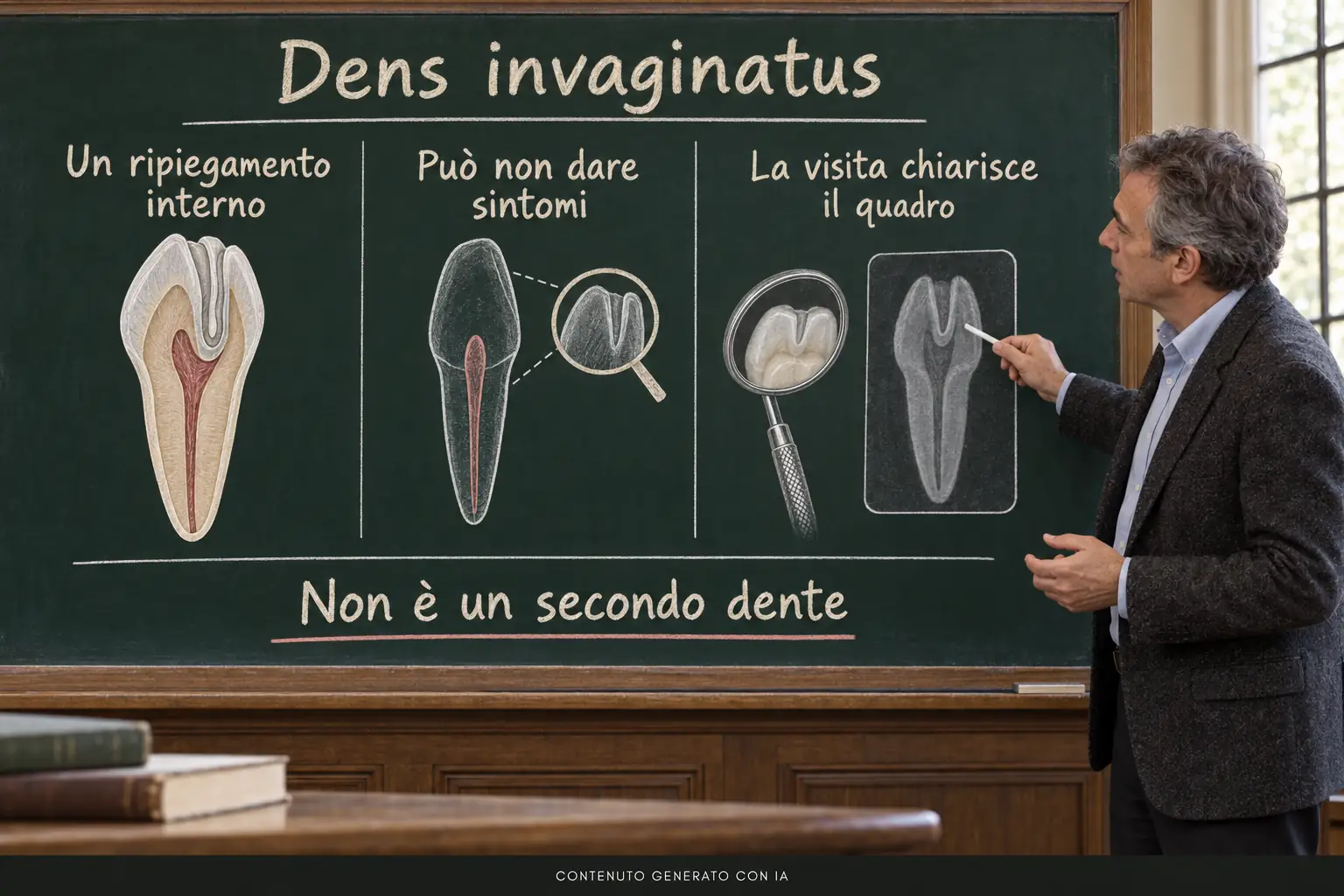
What signals can make him suspect
A deep pit on the inner side of an incisive, unusual form or a radiographic repertoire may suggest a deepening. Sometimes there is no disturbance; in other cases pain, color change or a small gum is observed. None of these signs confirm the invaginatus dens alone.
The clinical and radiographic examination of the different presentations is described in publication of the International Endodontic Journal dedicated to the diagnosis of invagination.
Invaginated tooth, caries and overnumbered tooth: differences
Dens invaginatus is a peculiarity of development; caries is a lesion that can appear later and complicate its management. An overnumerary tooth, however, is an extra dental element. They are different conditions, even when the common language uses similar expressions.
Even an infection near the root is a possible associated problem, not the name of anomaly. The STERE guide on dental granuloma and periapical lesions deepens this distinct picture.
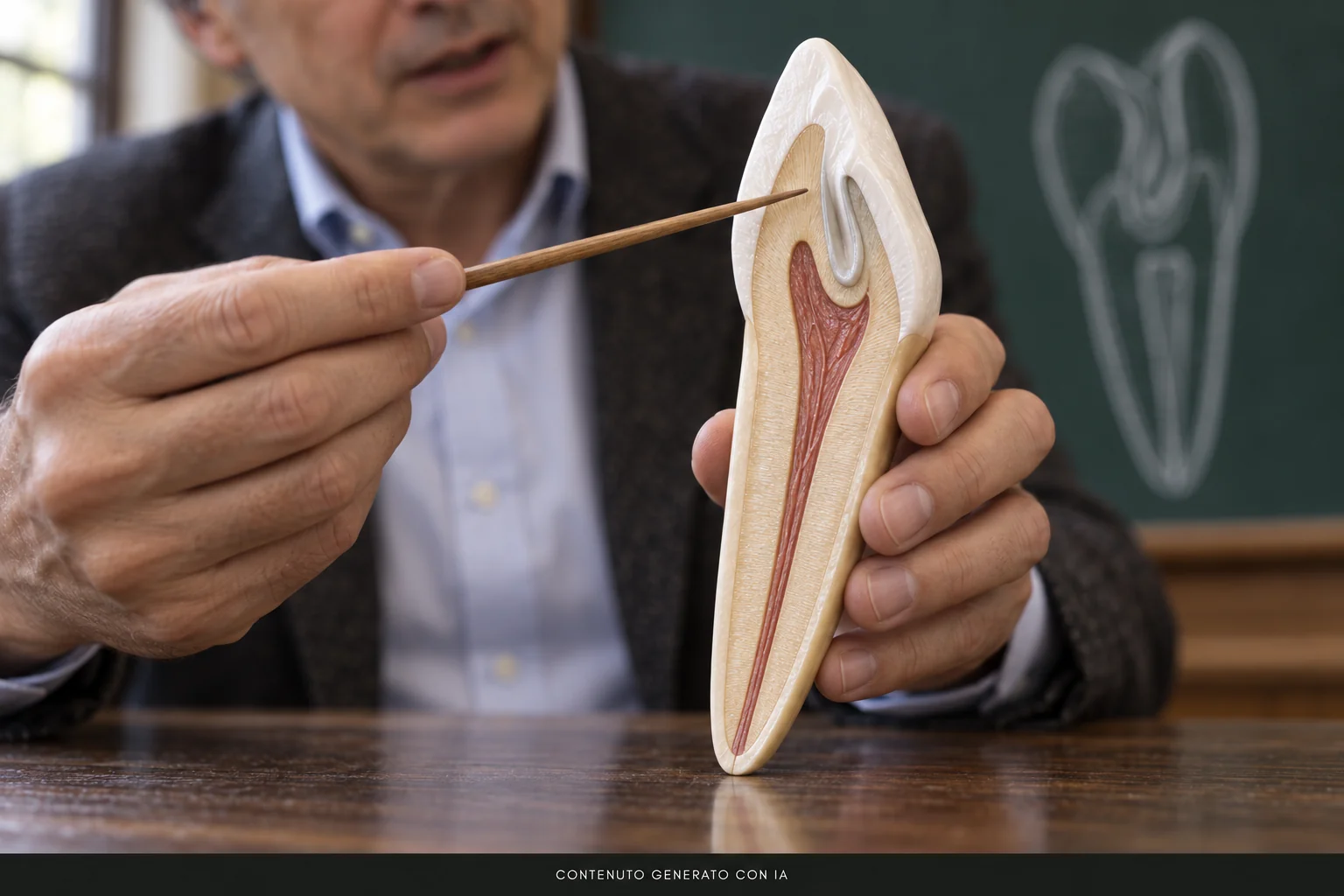
How to evaluate the tooth in the tooth
The dentist examines surface, gum and restoration, collects the history of symptoms and checks the pulping response. Endorali X-rays help to observe the path of invagination and the area around the root; it can also be useful to check the corresponding tooth of the other side.
CBCT is not an automatic examination: it is evaluated when three-dimensional detail can change a clinical decision. Theupdate of the British Dental Journal of June 2026 describes the importance of internal anatomy and the justified use of imaging in complex cases.
Quali percorsi possono essere considerati
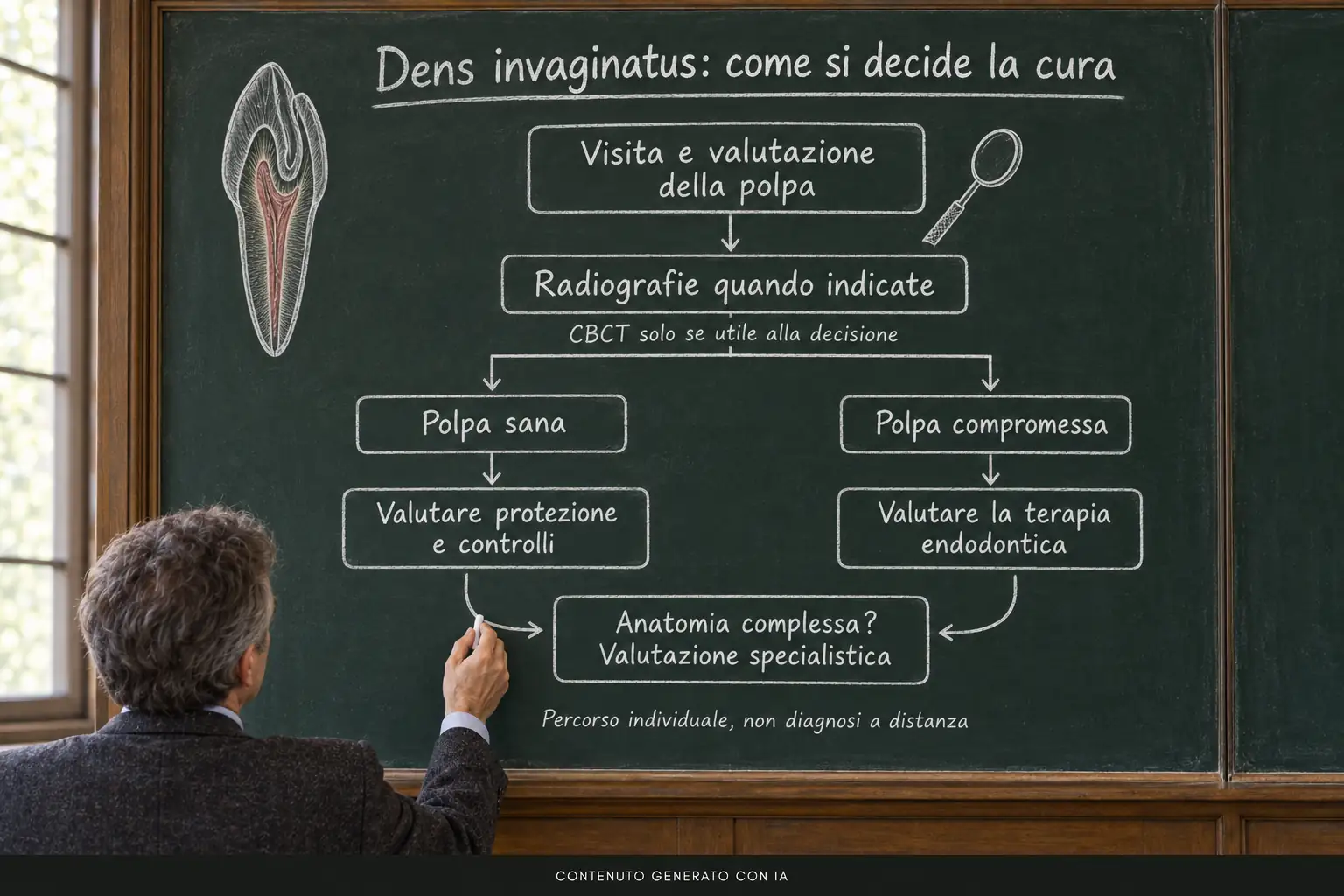
Protezione dell’ingresso e controlli
Se la polpa è sana, il professionista può valutare la sigillatura o il restauro dell’ingresso dell’invaginazione. La decisione dipende dall’accessibilità e dal rischio; i controlli servono a verificarne la tenuta.
Trattamento mirato dell’invaginazione
In alcune configurazioni è possibile intervenire sulla cavità invaginata conservando la polpa principale. Questa possibilità richiede una diagnosi precisa e non può essere stabilita osservando soltanto la corona.
Terapia endodontica quando indicata
Se la polpa è compromessa, può essere necessario un trattamento canalare adattato all’anatomia. La revisione del Journal of Endodontics sulle implicazioni cliniche del dens invaginatus illustra opzioni differenti secondo stato pulpare e complessità.
Valutazione specialistica dei casi complessi
Anatomie difficili o lesioni persistenti possono richiedere competenze specialistiche e ulteriori procedure. L’estrazione si considera quando la conservazione non è ragionevolmente praticabile, senza presentarla come conseguenza inevitabile della diagnosi.
Cosa fare a casa e quando chiedere assistenza
Pulire delicatamente il dente con gli strumenti indicati, rispettare i controlli e segnalare nuovi sintomi. Non esplorare una fossetta con aghi o strumenti, non tentare di chiuderla con prodotti domestici e non assumere antibiotici avanzati da altre terapie.
Dolore importante, gonfiore o febbre richiedono una valutazione rapida. Se compaiono difficoltà a respirare o deglutire, serve assistenza medica immediata. Questi segnali possono accompagnare un’infezione odontogena, come ricorda il NHS nella guida sull’ascesso dentale.
Valutazione odontoiatrica presso lo Studio Stere di Lecce
Lo Studio Odontoiatrico STERE si trova in Via Giovanni Boccaccio 19 C/D/E a Lecce e accoglie persone provenienti dal Salento e dalla Puglia. Per informazioni sulla valutazione e sui servizi di endodontic è disponibile studiostere.it; eventuali percorsi specialistici vengono definiti in base al caso.
Il Dott. Nicolò Stefanelli e la Dott.ssa Rosanna Renò hanno maturato più di dieci anni di esperienza nel settore odontoiatrico sul territorio italiano; tutto lo staff vanta a sua volta più di dieci anni di esperienza.
Se è prevista anche ortodonzia con allineatori trasparenti, l’anatomia e la salute del dente vanno considerate nella pianificazione. Il Dott. Lorenzo Garrisi è specialista in Ortodonzia e Invisalign Provider; la scelta del sistema resta subordinata alla valutazione ortodontica.
Domande frequenti sul dens invaginatus
Il dens invaginatus provoca sempre dolore?
No. Può essere scoperto durante un controllo. L’assenza di dolore non permette però di valutare da sola la salute della polpa.
È davvero un secondo dente dentro il primo?
No. “Dente nel dente” descrive un aspetto radiografico dovuto al ripiegamento dei tessuti dello stesso elemento dentale.
Serve sempre devitalizzare?
No. Se la polpa è sana possono essere valutati protezione e monitoraggio. La cura canalare dipende dalla diagnosi pulpare e dall’anatomia.
Una sigillatura elimina la necessità dei controlli?
No. Il professionista deve controllarne integrità, eventuali sintomi e risposta del dente, con esami proporzionati al rischio.
Si può riconoscere da una fotografia?
Una fotografia può mostrare un’irregolarità, ma non descrive la struttura interna. Diagnosi e indicazione terapeutica richiedono una visita e gli accertamenti necessari.
At Studio Odontoiatrico Stere you can find a complete range of preventive and curative dental treatments.
Se stai cercando un dentista a Lecce per migliorare l’igiene orale, prevenire carie e infiammazioni gengivali o scegliere prodotti domiciliari adatti alle tue esigenze, il team dello Studio Stere può accompagnarti con una valutazione personalizzata. Scopri di più su Scholarship. it e prenota la tua visita di controllo.
Read more important articles here: Blog
Visit the official website: Study Stereo
Come and visit us: Via Giovanni Boccaccio 19 C/D/E – Lecce
Contattaci ora per una valutazione.
Follow us on our social media:
Article written by Dr. Nicolò Stefanelli – Dentistry
“Prendersi Cura”
– Studio Stere –
Continue reading
Dentiera rotta: rimedi da evitare prima della valutazione | Studio Odontoiatrico Stere
Sports bite and mouthguards: differences and why they are not interchangeable | Dentistry study Stere
Tattoo from amalgam: how to evaluate a gray spot in the mouth | Dentistry study Stere
Twin teeth and melted: because a tooth can look double | Dentistry study Stere