Dementia and oral hygiene: help when routine becomes difficult | Dentistry study Stere
Dementia and oral hygiene: help when routine becomes difficult | Dentistry study Stere
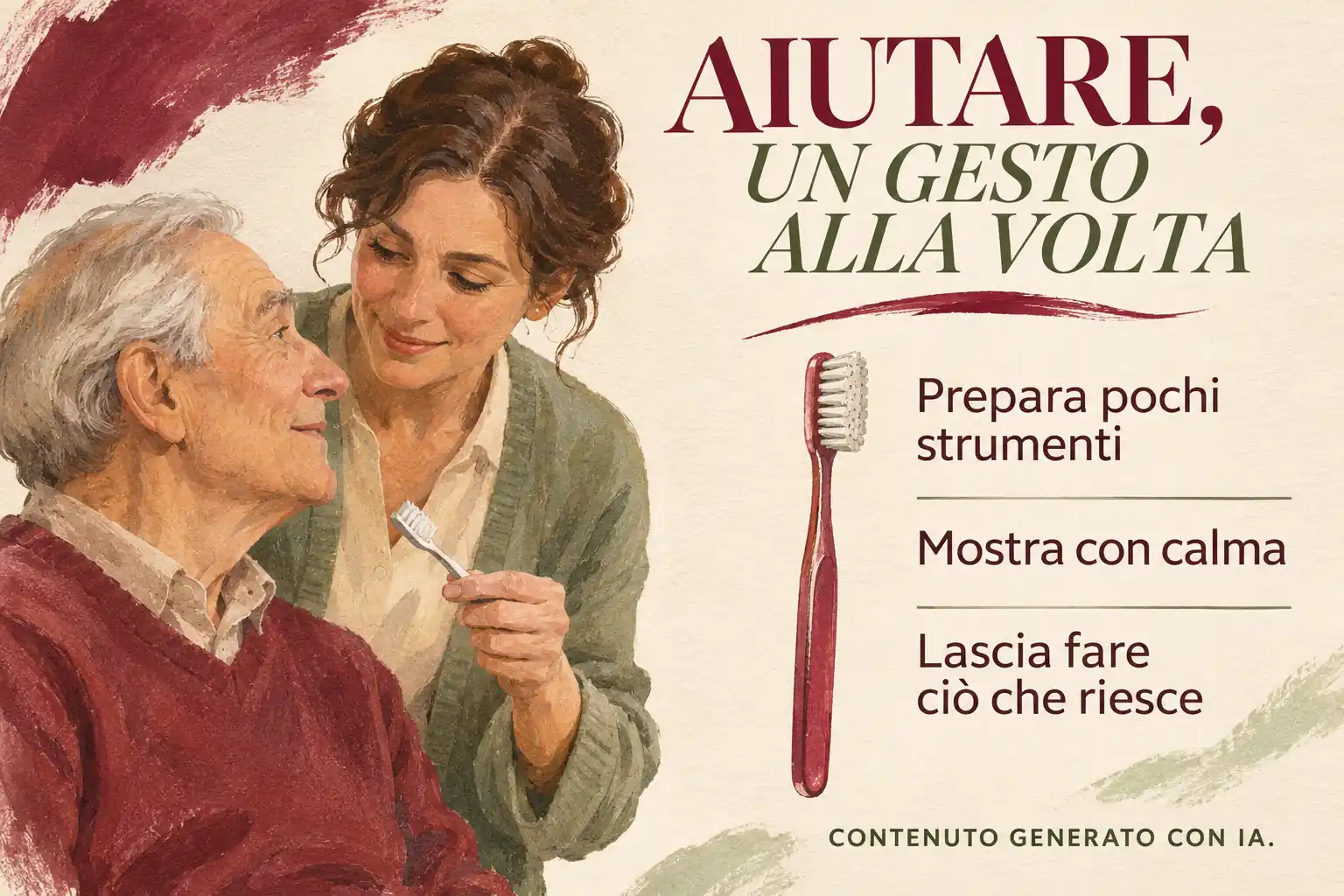
With dementia, a person can forget how to start oral hygiene or perceive the toothbrush as something foreign. The help must be adapted to what can still do.
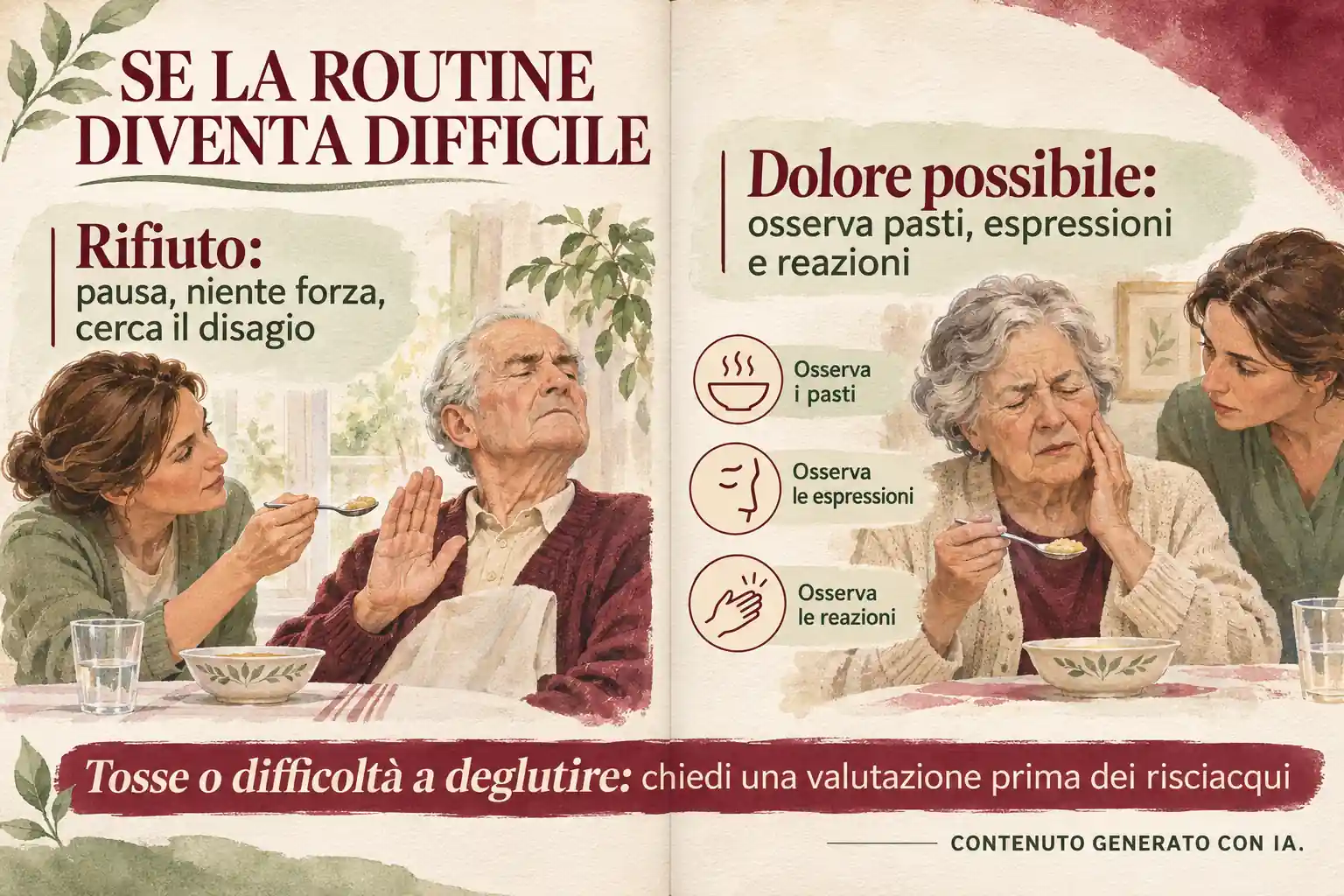
A new refusal can express fear, fatigue or pain: it should not be liquidated as simple opposition.
The goal is to maintain comfort and health of the mouth with a recognizable routine, involving the person and who assists it.

Why dementia can change oral hygiene
Dementia can interfere with memory, understanding and organization of gestures. The need for oral assistance varies over time and does not deduce only from diagnosis. At some times a reminder can be enough, in others it needs more direct help.
Obstacles to be recognized in routine
Management sequence
Prepare the tools in the same order can make it easier to start and continue.
Environment and communication
Noise, hurry and too many directions together can increase discomfort. Prefer a simple request at a time.
Unexpressed pain
A person may not be able to describe a sore tooth. Changes during meals or contact with the toothbrush are information to report.
Changes in health
Drugs, prostheses, dryness or difficulty swallowing can change the routine and require new adjustments.
Possible signs of unexpressed pain
Observe food rejection, unusual chewing, damping, bleeding or swelling. These signals do not show themselves a dental cause, but they deserve evaluation. A sudden change should not be automatically attributed to dementia.
Assistance and autonomy are not excluded
Having cognitive difficulties does not mean losing every skill of choice. Helping does not necessarily involve replacing the person. The problem is different from a single motor limitation: it can serve above all to make the gesture understandable and familiar.
For a related study: the STERE guide on the related theme.
How to prepare an aid plan
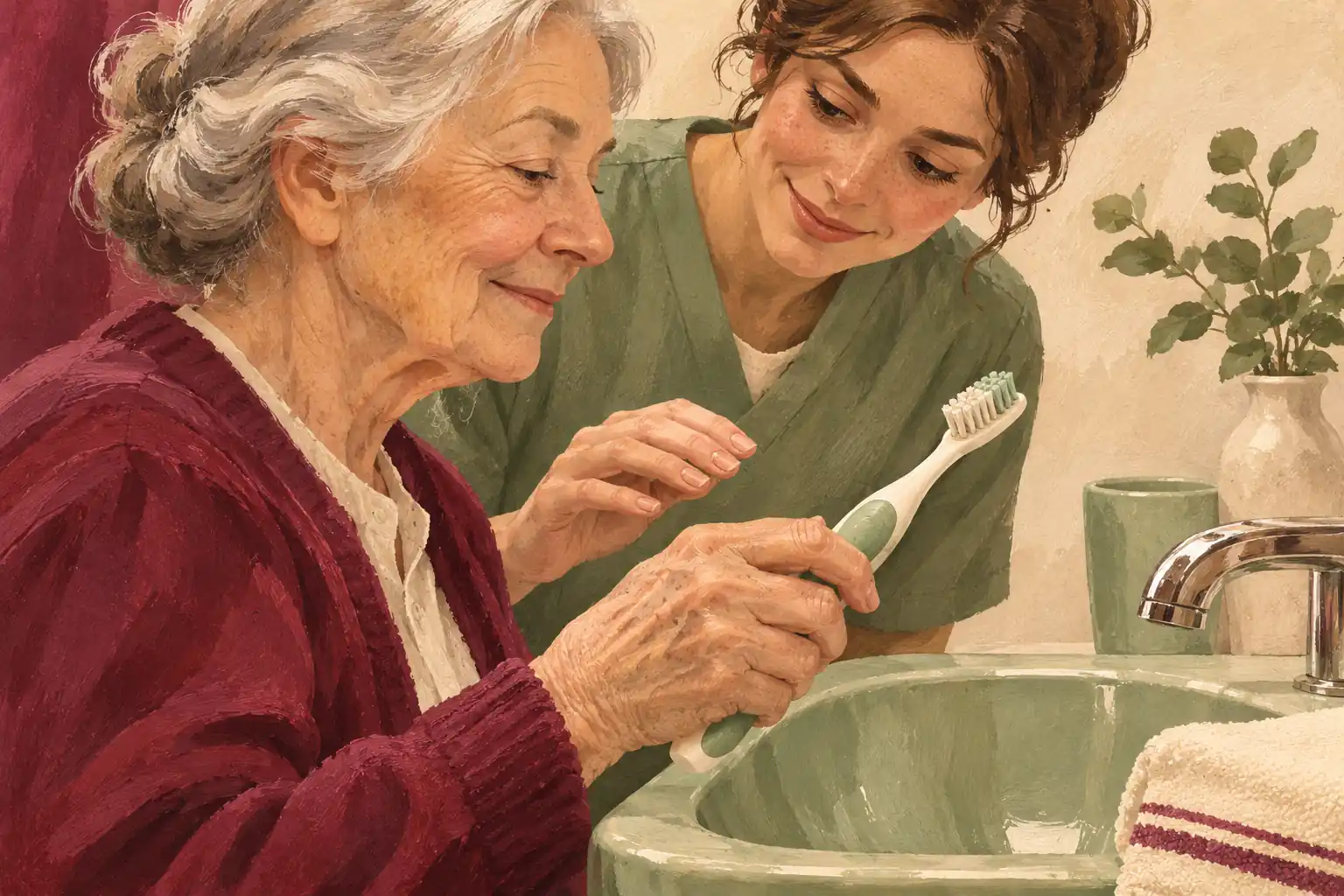
The visit brings information about teeth or prosthetics, previous habits, tolerated tools and more favorable moments of the day. With the involvement of the person, those who assist can describe what happens at home. The plan must specify how much help it serves and how to recognize a problem.
Sources of study: Alzheimer’s Society: mouth care; NICE: oral health in care facilities; NICE: support for daily hygiene.
Adapting support to the person
Maintain autonomy
Invite the person to start on their own when possible; intervene only where it stops or fails.
Show the gesture
A quiet demonstration can be more understandable than repeated instructions. Ask the professional how to assist in safety.
Manage refusal
Take a break, look for the reason and try again at a more favorable time. Do not force the opening of the mouth. A repeated refusal requires clinical comparison.
Share the routine
A short sheet with tools, necessary help and difficulty observed facilitates continuity between family members and assistants.
Daily care and difficulty swallowing
Clean the teeth with fluorine toothpaste and daily care of the prostheses according to the indications received. If the person coughs during hygiene or fatigue to swallow, ask for an assessment before proposing rinses or other adjustments.
Organize your visit to the Studio Stere
When you book at Studio Stere, you report the difficulties of communication and assistance, in order to discuss the organization of the visit. The most complex needs can require a dedicated path, to be defined with caregivers.
Frequently asked questions
Does dementia make it inevitable to lose teeth?
No. Adapted prevention and assistance remain important.
Do I need to replace the person immediately?
No. Start with residual capabilities and add the necessary help.
What to do if he refuses the toothbrush?
Avoid force, take a break and report persistent waste to seek its cause.
How to recognize a possible pain?
See changes in meals, expressions, sleep or hygiene reactions, without considering them a diagnosis.
Who brings the information to the visit?
The person and, with his involvement, who knows the routine and therapies.
At Studio Odontoiatrico Stere you can find a complete range of preventive and curative dental treatments.
If you are looking for a dentist in Lecce to improve oral hygiene, prevent caries and gum inflammations or choose home products that suit your needs, the Studio Stere team can accompany you with a customized evaluation. Learn more about Scholarship. it and book your visit to control.
Read more important articles here: Blog
Visit the official website: Study Stereo
Come and visit us: Via Giovanni Boccaccio 19 C/D/E – Lecce
Contact us now for an evaluation.
Follow us on our social media:
Article written by Dr. Nicolò Stefanelli – Dentistry
Published by: Lmao Graphic
"Take Care"
– Studio Stere –
Continue reading
Persistent dentoalveolar pain: when examinations do not explain toothache | Dentistry study Stere
Organ and dentist transplantation: prepare control before and after surgery | Dentistry study Stere
Dementia and oral hygiene: help when routine becomes difficult | Dentistry study Stere
Inhaler cortisonists: Protect your mouth without interrupting therapy | Dentistry study Stere