Urgent mouth syndrome in Lecce: symptoms, causes and evaluation | Dentistry study Stere
Urgent mouth syndrome in Lecce: symptoms, causes and evaluation | Dentistry study Stere
A persistent burning on the tongue, on the lips or on the palate can be difficult to explain, especially when in the mirror the mouth seems normal. The feeling can be continuous or increase during the day and associate with altered taste, tingling or perceived dryness.
With the expression "sindrome mouth urente", often used in online research, it refers to urent mouth syndrome, also called burning mouth syndrome or stomatodinia. Not every oral burning, however, falls into this diagnosis: infections, irritations, reduction of saliva, drugs and general conditions can produce similar symptoms.
For those seeking information about mouth syndrome in Lecce, the most useful step is a clinical evaluation that excludes recognizable causes before talking about an idiopathic form. This article offers general information and does not replace a personal diagnosis.

What is urging mouth syndrome
The classification ICHD-3, section 13.11 describes the primary urent mouth syndrome as an intraoral sensation of burning or dysextesia that occurs every day for more than two hours a day and for more than three months, with mucosa of normal appearance and without a clinically obvious cause. These are classified criteria for professionals, not a checklist for self-diagnosis or a reason to wait three months before requesting a check.
TheInternational Classification of Orofacial Pain reserves the diagnosis of urging mouth syndrome to cases where possible local and system causes have been excluded. When a precise cause is identified, it is more correct to describe a secondary oral burning to the condition found and to treat that condition.
Causes and factors associated with oral burning
The symptom "burning mouth" does not have only one origin. The distinction between idiopathic syndrome and secondary burning is essential because it changes the clinical path.
Increased perception of pain and taste
In the idiopathic form there is no lesion that explains the pain. It is believed that alterations of the nerve routes may be involved that process pain, temperature and taste. The National Institute of Dental and Craniofacial Research describes the primary form as a complex disorder in which the nerves of pain and taste may be involved; this does not mean that the symptom is imaginary.
Dryness, infections and local irritation
Xerostomy, oral candidiasis, prostheses or dental margins that rub, reactions to materials or products and other conditions of the mucosa may cause burning. In these cases the fabric can show specific signs, but not always the cause is recognizable without visiting or deepening. The page on dry mouth and xerostomy explains why the sensation of dryness does not always coincide with a measurable reduction of saliva.
Systems and conditions
Anemia, iron deficiency, vitamin B12 or folate, diabetes and thyroid disorders may enter the differential diagnosis according to clinical history. The syndrome is observed more often in women around or after menopause, but the association does not identify alone the cause and the condition may also affect other people.
Drugs, habits and emotional factors
Some medicines may change saliva or taste; others may be suspected in relation to the time appearance of the disorder. Depletion points, parafunctions and repeated irritations deserve attention because they can contribute to oral symptoms or coexist with them. Stress, anxiety, sleep and mood can modulate a persistent pain, without making it less real and without showing that they are the only origin. No prescribed therapy should be modified independently.
Symptoms and signs to be observed
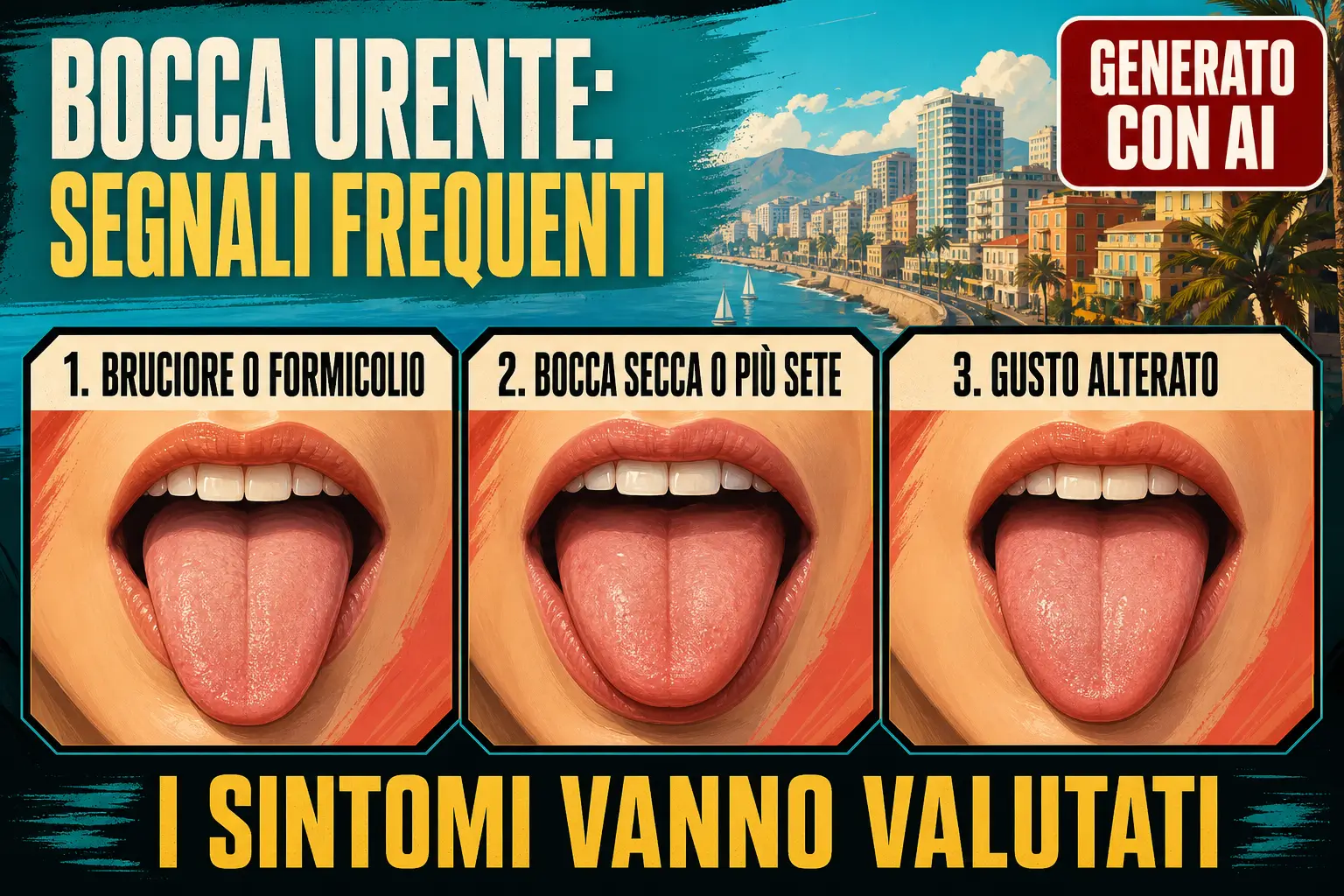
The most typical symptom is a burning, burning or tingling sensation. It can affect the tip and sides of the tongue, but also lips, palate or more areas of the mouth. In some people it is present since the morning; in others it increases during the day. They can appear bitter or metallic taste, reduction or alteration of taste, numbness and subjective sensation of dry mouth.
A frequent element is the disproportion between the reported discomfort and the seemingly normal appearance of the mucosa. This does not make pain less important, but requires to exclude other causes. Chiazzes that change seat, flaws, plaques, redness, ulcers, swellings or irritation points instead orientate towards different diagnosis.
It is useful to note where it burns, when it started, how long it lasts every day, which foods or drinks change it, if the taste has changed and if the disorder interferes with sleep, nutrition or quality of life. The course helps the professional, but does not replace the direct examination.
Urgent mouth syndrome, xerostomy and lesions: differences
Xerostomy has as a dominant symptom the dry mouth sensation and can accompany dense saliva, difficulty with dry foods and increased risk of caries. In Urgent mouth syndrome the dominant disorder is burning pain and dryness can only be perceived. The two conditions can coexist, but are not synonymous.
The geographical language presents visible depapillate areas and migrants; white language covers a patina or plaques to distinguish also from candidiasis; I'll give it to you. afte are recognizable ulcers. Everyone can burn, but their diagnostic intent is different from idiopathic syndrome with clinically normal mucosa.
An unexplained oral ulcer that lasts more than three weeks, a persistent and unfolded nodule at the neck, a lip or oral cavity nodule and a red or red and white color suspect require an appropriate evaluation. The NICE NG12 recommendations indicate specific criteria for sending these findings. New difficulties in swallowing or speaking deserve clinical attention, but should not be presented as part of the same NICE list for the oral cable. These signs have many possible causes and do not mean tumor automatically, but should not be ignored.

How to get to the diagnosis
There is no single test confirming urent mouth syndrome. The evaluation starts from the history of symptoms, known diseases, drugs and supplements, recent dental care, habits and impact on everyday life. The exam includes tongue, lips, palate, cheeks, gums, teeth, restorations, prostheses and saliva characteristics.
Based on the findings, targeted blood tests, oral swab, salivary flow measurement, alleergological evaluation, biopsy or imaging may be indicated. The NIDCR lists these possibilities by specifying that the choice depends on the case: none of these tests confirm alone the syndrome and not all people need every in-depth study.
If a local or systemic cause emerges, the path focuses on that. If the exam is normal and the appropriate insights do not identify an alternative explanation, it may be considered the idiopathic diagnosis, sometimes with sending to oral medicine, orofacial pain, otolaryngology or other professionals.
Possible management paths
There is no valid therapy for everyone. Realistic goals are to clarify the picture, reduce aggravating factors, protect tissues, contain pain and limit the impact on everyday life.
Treating an identifiable cause
When the burning is related to candidiasis, hypoalivation, deficiency, mechanical irritation or general condition, it intervenes on the confirmed cause and controls the answer. Antifungals, supplements or pharmaceutical modifications should not be started "by attempt": an unnecessary cure may delay diagnosis or cause unwanted effects.
Manage pain in a personalized way
In idiopathic form, the professional can assess local or systemic strategies used in neuropathic pain, considering age, other therapies, risks and benefits. The Cochrane review published in 2016, based on research concluded in December 2015, judged very low the overall certainty of the available tests: it is therefore not prudent to present a drug, supplement or procedure as a guaranteed solution.
Protect mucosa and saliva
If there is dryness, regular hydration, lubricating products or savage substitutes and preventive measures for teeth and mucous membranes can be evaluated. Creams without sugar can help some people with residual salivary function, but are not suitable for everyone. Foods or products very acidic, containing alcohol or irritants can make it worse.
Program follow-up and multidisciplinary support
The control over time allows to verify the performance, the tolerance of the interventions and the possible appearance of new signs. The information material of theUniversity College London Hospitals also considers psychological support and strategies to live with persistent pain. This support does not deny the reality of the symptom and can support clinical management, without promising an equal effectiveness for all.

What to do at home and what to avoid
While waiting for the evaluation it can be useful to drink small sips of fresh water, choose foods at moderate temperature and maintain gentle hygiene with soft toothbrush. If they are irritating, it is reasonable to temporarily limit very spicy foods or acids, alcoholic beverages, tobacco and alcohol-containing collutors. A synthetic diary of symptoms, meals and drugs can facilitate clinical interview.
It is better not to apply lemon, concentrated bicarbonate, oxygenated water, essential oils or anesthetics without indication. Do not repeatedly scrape a language that appears normal and do not take antifungal, vitamins or supplements just because "they could help". Above all, do not suspend prescribed medications: any changes are the doctor who indicated them.
A burning that persists, worsens, makes it difficult to eat or drink or accompanies injuries, swelling, fever or difficulty swallowing deserves a timely contact with the appropriate professional.
Evaluation of Urgent Mouth Syndrome at Studio STERE di Lecce
At Studio Odontoiatrico STERE, in Via Giovanni Boccaccio 19 C/D/E in Lecce, the evaluation starts from listening to the symptom and the full examination of the oral cable. Bring the updated list of medications and supplements, indicate when the burning started and describe whether there are dryness or alterations of the taste helps to set any subsequent steps.
Dr. Nicolò Stefanelli and Dr. Rosanna Renò have gained more than ten years of experience in the dental sector in Italy; the staff of Studio STERE has more than ten years of experience. The visit can distinguish dental and mucous factors from situations that require insights or collaboration with other professionals, without promising a diagnosis or therapeutic response equal to everyone.
When the framework requires it, the dental evaluation can be accompanied by targeted examinations or by the contribution of other professionals. The route depends on the findings and individual history: not every person needs the same insights. To organize an evaluation, the page is available contacts.
Frequently Asked Questions about Urgent mouth syndrome
Is urent mouth syndrome contagious?
No. Idiopathic form is not an infection and is not transmitted. If the burning depends instead on an infectious condition, as a confirmed candidiasis, the specific indications for that diagnosis are valid.
Can the mouth burn even if it seems normal?
Yes. In the urging mouth syndrome the mucosa may appear clinically normal despite the pain. Precisely for this reason they need anamnesi, examination and, when indicated, investigations to exclude causes not visible to a domestic control.
Dry mouth and urging mouth syndrome are the same?
No. Dryness may accompany the syndrome, but xerostomy is a distinct symptom and hypoalivation is a measurable reduction of saliva. The flow can be normal even when the person reports dryness.
What tests do you need to confirm the diagnosis?
There is no equal package for all. The professional chooses exams based on history and findings: they may include blood analysis, swab, saliva evaluation or other insights, but no single examination confirms alone the syndrome.
Is there a definitive cure?
There is no universal solution. When a cause is identified, treating it can reduce burning; in idiopathic form, the goal is a personalized management of symptoms and their impact. Times and response vary, so promises of healing or standard remedies are not prudent.
At Studio Odontoiatrico Stere you can find a complete range of preventive and curative dental treatments.
If you are looking for a dentist in Lecce to improve oral hygiene, prevent caries and gum inflammations or choose home products that suit your needs, the Studio Stere team can accompany you with a customized evaluation. Learn more about Scholarship. it and book your visit to control.
Read more important articles here: Blog
Visit the official website: Study Stereo
Come and visit us: Via Giovanni Boccaccio 19 C/D/E – Lecce
Contact us now for an evaluation.
Follow us on our social media:
Article written by Dr. Nicolò Stefanelli – Dentistry
Continue reading
Conoid lateral incisive: how to assess shape, space and restoration | Dentistry study Stere
Pulpotomy in the adult permanent tooth: when to store part of the pulp | Dentistry study Stere
Tooth moved after a shock: because lust requires an urgent visit | Dentistry study Stere
Odontoma: when an obstacle prevents a tooth from popping | Dentistry study Stere