Sensibilità dentale: cause e rimedi | Studio Odontoiatrico Stere
Sensibilità dentale: cause e rimedi | Studio Odontoiatrico Stere
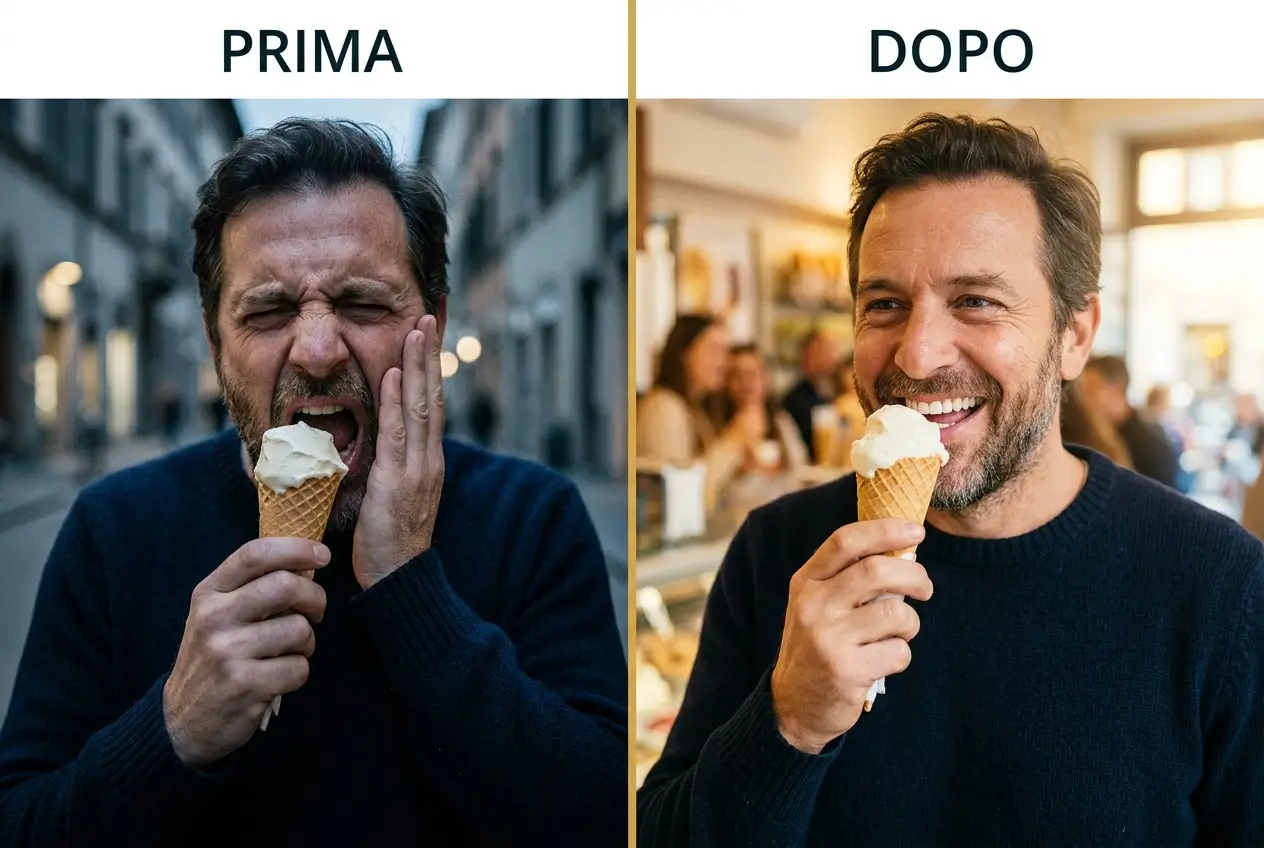
There is a moment that many people know perfectly: the first sip of a frozen drink in summer, a spoon of ice cream or a breath of cold air while walking. The discomfort can appear acutely, quickly and intensely, starting from the teeth and disappear in a few seconds, up to condition some daily habits.
His name is Dental sensitivity, or dental hypersensitivity in clinical language, and is a frequent dental disorder in adults. It may occur with different intensity and should not be considered automatically normal or inevitable, especially when repeating over time.
At the Studio Odontoiatrico Stere di Lecce, Dr. Nicolò Stefanelli and the Dr. Rosanna Renò accurate evaluations are carried out to identify the possible cause of dental sensitivity and define a therapeutic path suitable for patient conditions. The study is located in Via Giovanni Boccaccio 19 C/D/E in Lecce and welcomes patients from Lecce, Salento and Puglia.

What is dental sensitivity
Dental sensitivity is an acute and transient painful response to stimuli that normally should not cause pain, such as cold, hot, sweet, acid or mechanical contact. Often it is connected to the tooth exposure, the tooth layer located below the enamel.
To understand why the exposed tooth can cause pain is useful to know the structure of the tooth. Dental enamel, i.e. the outer layer, does not contain nerve cells and is not sensitive to stimuli. Below the enamel is the dentine, crossed by small microscopic canals, called tooth tubes, connected to the nerve endings of the dental pulp.
When the tooth is exposed, due to loss of enamel or gum recession, thermal, chemical or mechanical stimuli can cause a fluid movement in the dental piping. This movement is perceived by nerve endings as a rapid, pungent and localized pain.
Causes of dental sensitivity
Dental sensitivity can depend on different causes. Identifying them correctly is essential to set a treatment consistent with the patient's clinical situation.
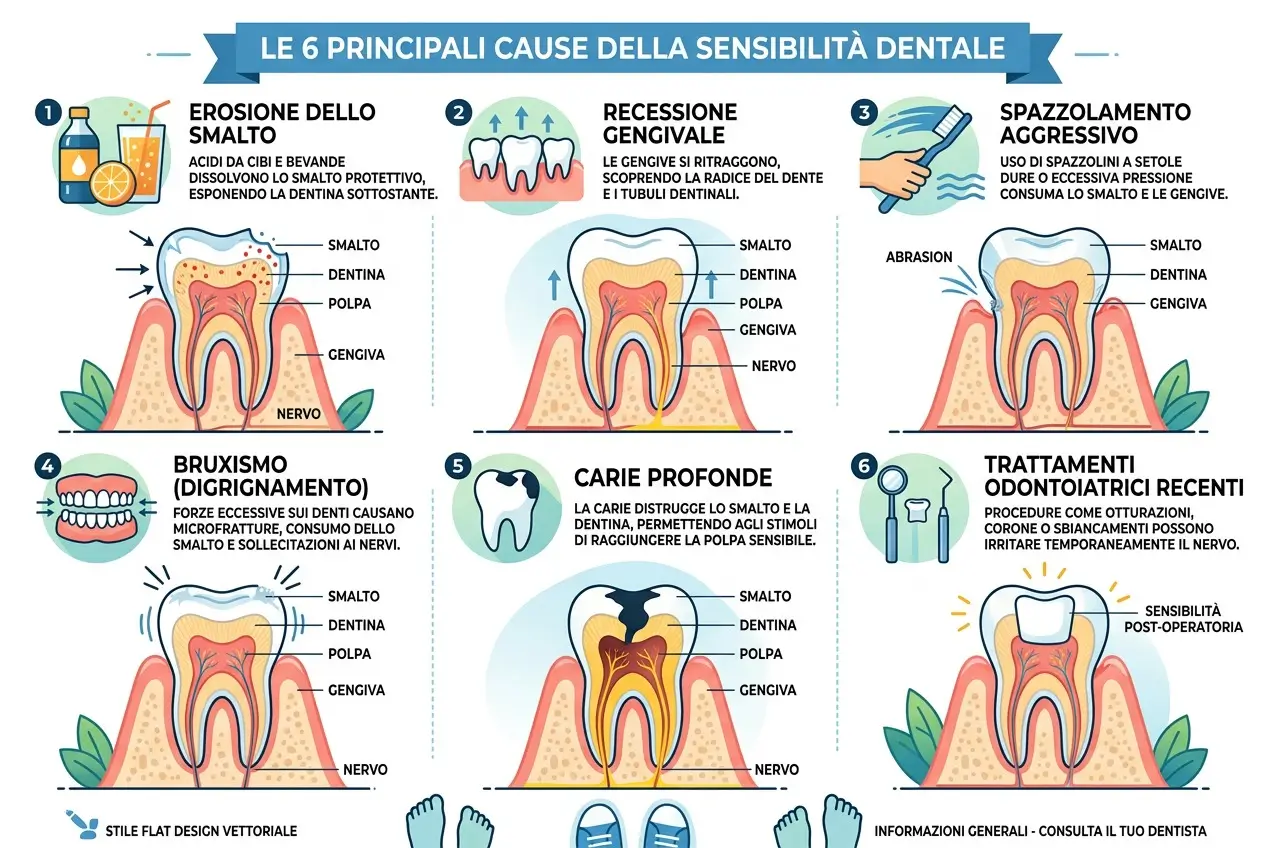
Enamel erosion
Chemical erosion of the enamel is one of the frequent causes of dental sensitivity in adults. It can be favored by repeated exposure to acid substances, such as carbonated drinks, juices, vinegar or gastroesophageal reflux episodes. With time, the enamel can consume and leave the dentine more exposed to stimuli.
Recession gum
When the gums retreat, the tooth root can remain partially discovered. Unlike the dental crown, the root is not protected by the same thickness of enamel and can be more sensitive to cold, warm, acidic foods and brushing.
Aggressive brushing
The use of a hard bristle toothbrush or too energetic brushing technique can encourage abrasion of the enamel in the area close to the gum and contribute to the gum recession. For this reason, home hygiene must also be corrected and personalized.
Bruxism
Bruxism, i.e. tightening or grinding of teeth, can cause progressive wear of the enamel and increase dental sensitivity. In these cases, dental evaluation helps to understand whether sensitivity is also linked to excessive chewing loads or night parafunctions.
Cute and fractures of the enamel
Charies that reaches the tooth can cause localized sensitivity, often different from the classic transient tooth hypersensitivity. Even small cracks or fractures of the enamel, sometimes difficult to see to the naked eye, can expose sensitive areas of the tooth and require a professional evaluation.
Recent dental treatments
After some treatments, such as professional dental whitening, fillings, radicular sanding or aesthetic procedures, temporary sensitivity may appear. In these cases, the discomfort is monitored and managed according to the duration, intensity and individual response of the patient.
Symptoms of dental sensitivity
Dental sensitivity is usually manifested with rapid, acute and transient pain, which appears in response to a specific stimulus and tends to decrease shortly after its removal. The most common stimuli are cold, hot, sweet, acid, cold air or contact with the toothbrush.
The discomfort may affect a single tooth or more teeth, often in the area close to the gum or on the surfaces where the enamel is more consumed. Usually, tooth hypersensitivity does not cause continuous spontaneous pain, but is activated by a precise stimulus.
When the pain is spontaneous, prolonged, button, associated with swelling or does not disappear after a few seconds, it is important to book a dental visit. In these cases, the disorder may depend on deep caries, inflammation of the dental pulp or other conditions to be carefully assessed.
Dental sensitivity diagnosis at Studio Stere
Diagnosis of dental sensitivity requires a complete clinical evaluation, aimed at identifying the cause of discomfort and distinguishing dental hypersensitivity from other types of dental pain. At Studio Odontoiatrico Stere di Lecce, the diagnostic path starts from listening to the symptoms reported by the patient and accurate observation of teeth, gums and oral cable.
Anamnesi and daily habits
During the visit, information on eating habits, oral home hygiene, on the frequent consumption of acid foods, on the presence of bruxism, on the sensitivity to cold or hot and on recent dental treatments are collected.
Clinical examination and sensitivity tests
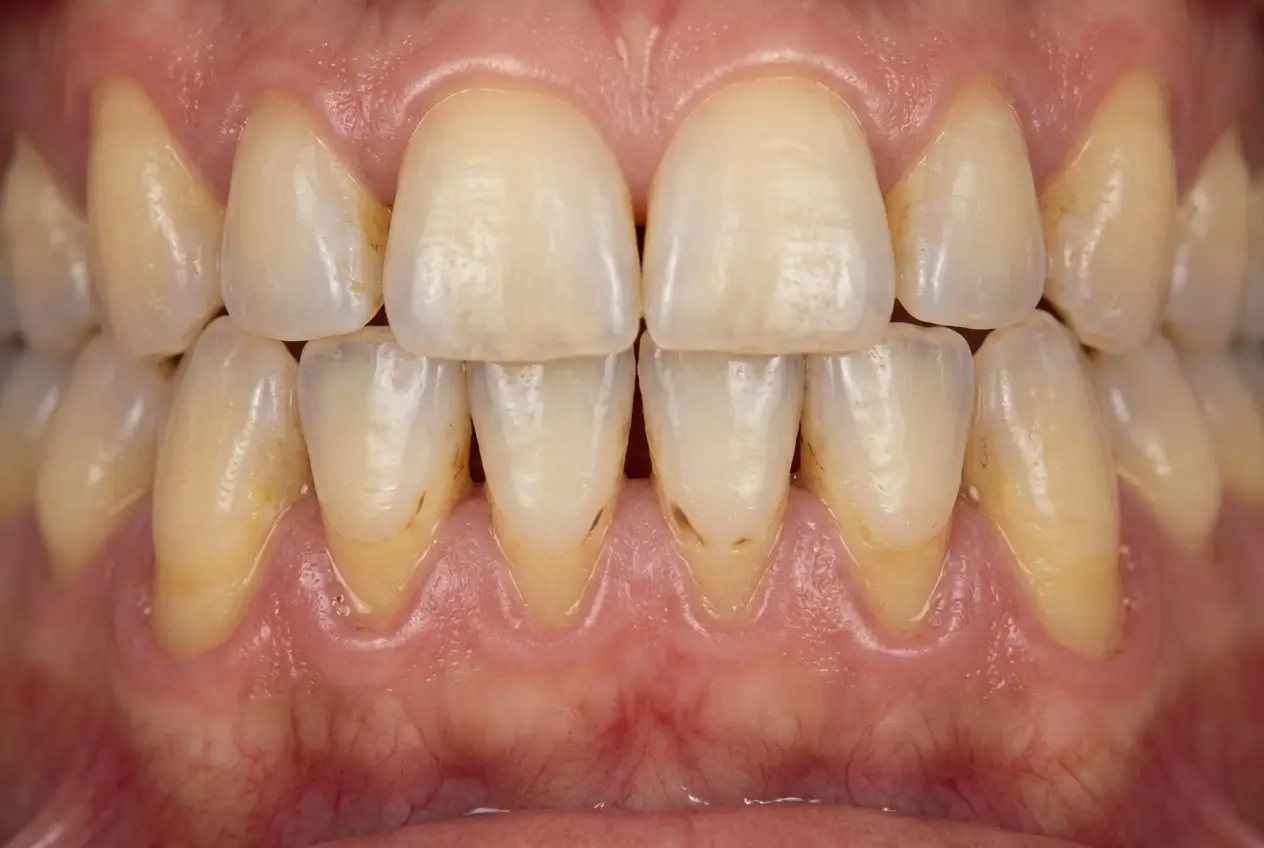
The clinical examination allows to observe enamel, gum margin, any recessions, abrasions, erosions, caries or small fractures. When necessary, sensitivity tests can be performed with controlled stimuli, useful to identify the teeth involved and to understand the painful response.
Radiographic evaluation when indicated
In some cases, radiographic analysis can help to exclude deep caries, pulp problems or alterations not visible during clinical examination alone. The correct diagnosis allows to propose a targeted treatment and not only based on the symptom.
Treatment of dental sensitivity
Treatment of dental sensitivity depends on the identified cause and severity of the disorder. At the Studio Odontoiatrico Stere di Lecce, the path is personalized after the visit, avoiding standardized solutions and always evaluating the state of enamel, gums, roots and overall oral health.
Professional desensitivity
The professional application of desensitizing agents can help reduce the transmission of stimuli through the dental tubules. These are quick and generally well tolerated treatments, especially when exposed teeth are responsible for the discomfort.
Sealing of sensitive areas
In the most obvious cases, adhesive materials or resins can be used to create a protective barrier on exposed areas. This solution is evaluated according to the position of sensitivity and the amount of dental tissue involved.
Treatment of caries, abrasions and fractures
When sensitivity is caused by caries, deep abrasions or small fractures, it is necessary to intervene on the main cause. Treatment may include conservative restorations, composite fillings or further procedures, defined after clinical diagnosis.
Management of gum recessions and bruxism
If sensitivity depends on important gum recession, the dentist can assess specific paths to protect the exposed root. In the presence of bruxism, instead, a night to reduce dental wear and protect enamel over time.
Dental whitening and sensitivity
In patients who want dental whitening but suffer from sensitivity, it is important to perform an accurate assessment first. The aesthetic treatment should only be planned when the enamel and gum conditions allow it, choosing protocols suitable for the individual case.
Domicile remedies for dental sensitivity
Domicile remedies do not replace dental evaluation, but can help reduce daily discomfort when chosen correctly. Desensitizing toothpaste can be useful if used regularly, but it should not become a way to ignore the cause of the problem.
It is important to use a soft bristle brush, avoid excessive pressure during brushing and prefer delicate movements. Also the reduction of carbonated beverages, acid juices and very acidic foods can help protect the enamel, especially in patients prepared for dental erosion.
When indicated by the dentist, fluoride products or other specific seals can be recommended to support enamel protection and reduce sensitivity. However, each indication must be adapted to the actual condition of the patient's mouth.
What to avoid in case of dental sensitivity
Dental sensitivity should not be ignored or automatically considered normal. If the discomfort is repeated, worsened or conditioned oral nutrition and hygiene, it is advisable to book a visit to understand the origin of the problem.
It is better to avoid hard bristles, aggressive brushing, frequent consumption of acid drinks and prolonged self-medication with desensitizing products without a professional evaluation. These behaviors can temporarily reduce the discomfort or, on the contrary, worsen erosion, abrasion and gum recession.
The most prudent choice is to identify the cause of sensitivity and intervene in a targeted manner, avoiding casual treatments or solutions not suitable for the clinical situation.
Dental sensitivity in Lecce at the Studio Odontoiatrico Stere
I do. Dental Stere Study is located in Via Giovanni Boccaccio 19 C/D/E in Lecce and offers pathways of diagnosis, prevention and treatment of dental sensitivity. The Dr. Nicolò Stefanelli and the Dr. Rosanna Renò evaluate each patient with clinical attention, clear communication and useful tools to understand the origin of the discomfort.
For those looking for a dentist in Lecce for sensitive teeth, discomfort to the cold, pain during brushing, withdrawn gums or nail polish, Studio Stere welcomes patients from Lecce, Salento and Puglia with a prudent, personalized and oral health-oriented approach.
You can explore other treatments available in the study by visiting the pages dedicated to dental hygiene in Lecce, non surgical parodontology, tooth whitening and insights into oral health.
Frequently Asked Questions about Dental Sensitivity in Lecce
Does dental sensitivity pass by itself?
In some cases, as after a professional dental whitening or a recent treatment, sensitivity can be temporary. When the discomfort persists, worsens or repeats often, it is important to identify the cause with a dental visit.
Does desensitizing toothpaste really work?
Desensitizing toothpaste can help reduce the discomfort if used with constancy, but it does not always treat the main cause. If sensitivity depends on erosion, gum recession, caries or bruxism, it serves a professional evaluation.
Is dental sensitivity always a signal of caries?
No. Caries are just one of the possible causes. Sensitivity can also depend on worn enamel, gums, brushing abrasion, bruxism or recent dental treatments.
Can I do dental whitening if I have sensitive teeth?
In many cases it is possible, but first a clinical evaluation is necessary. The state of enamel, gums and the cause of sensitivity help to choose the most suitable and prudent protocol.
How many sessions are needed to treat dental sensitivity?
It depends on the cause and severity of the disorder. In mild cases, targeted professional treatment may be sufficient, while more complex situations, such as gum recessions, bruxism or deep caries, may require a more articulated path.
Where to treat dental sensitivity in Lecce?
At the Studio Odontoiatrico Stere in Lecce, Dr. Nicolò Stefanelli and Dr. Rosanna Renò evaluate sensitive teeth, nail polish, gums withdrawn and cold weather with personalized paths. The studio is located in Via Giovanni Boccaccio 19 C/D/E in Lecce.
At Studio Odontoiatrico Stere you can find a complete range of preventive and curative dental treatments.
If you are looking for a dentist in Lecce for dental prevention, in Salento or Puglia, our team is ready to welcome you with expertise, technology and attention to detail. Learn more about studiostere.it and book your check-up today.
Article written by Dr. Nicolò Stefanelli – Dentistry

Read more important articles here: Blog
Visit the official website: Study Stereo
Come and visit us: Via Giovanni Boccaccio 19 C/D/E – Lecce
Follow us on our social media:
Article written by Dr. Nicolò Stefanelli – Dentistry
Continue reading
Dentiera rotta: rimedi da evitare prima della valutazione | Studio Odontoiatrico Stere
Sports bite and mouthguards: differences and why they are not interchangeable | Dentistry study Stere
Tattoo from amalgam: how to evaluate a gray spot in the mouth | Dentistry study Stere
Twin teeth and melted: because a tooth can look double | Dentistry study Stere