Fixed language: how to clean the grooves without irritating it | Dentistry study Stere
Fixed language: how to clean the grooves without irritating it | Dentistry study Stere
Small grooves on the upper part of the tongue can be a habitual repertoire. The fissured language is often recognized during a control, without causing symptoms.
Note the slots does not mean having to delete them. The point is to distinguish a stable feature from a recent change or a different injury.
Cleaning must gently remove surface residues. Trying to reach the bottom of the grooves with pointed instruments can instead cause irritation.
What does that mean?
The fixed language has variable depth grooves and disposition on the tongue back. It is generally a benign condition, often asymptomatic. Its presence does not automatically attribute to the tongue any burning or alteration of taste.
Causes, factors and aspects to consider
A cause not always defined
The origin is not fully clarified. It is not correct to transform the shape of the grooves into a diagnosis of deficiency or general disease.
Changes with age
The feature can be observed more often over the years. A rapid change, however, deserves a precise description.
Residues in the grooves
Contained material can promote discomfort or bad smell. Cleaning must remain light, without digging.
Associated Terms
It can coexist with other characteristics of the language, such as the geographic language. This does not make the two conditions equivalent.

Signals to observe and report
Stable and not painful bones are different from a new wound. Report bleeding, persistent pain, a hardened area or an ulceration that does not heal. If the difficulty concerns swallowing or breathing, the priority is a timely assessment appropriate to the symptom.
Distinguish situations that may seem similar
The geographical language has areas with different appearance that can change location; a patina is instead a superficial deposit. Online images can confuse different pictures. A fixed language does not exclude an independent problem.
How to evaluate
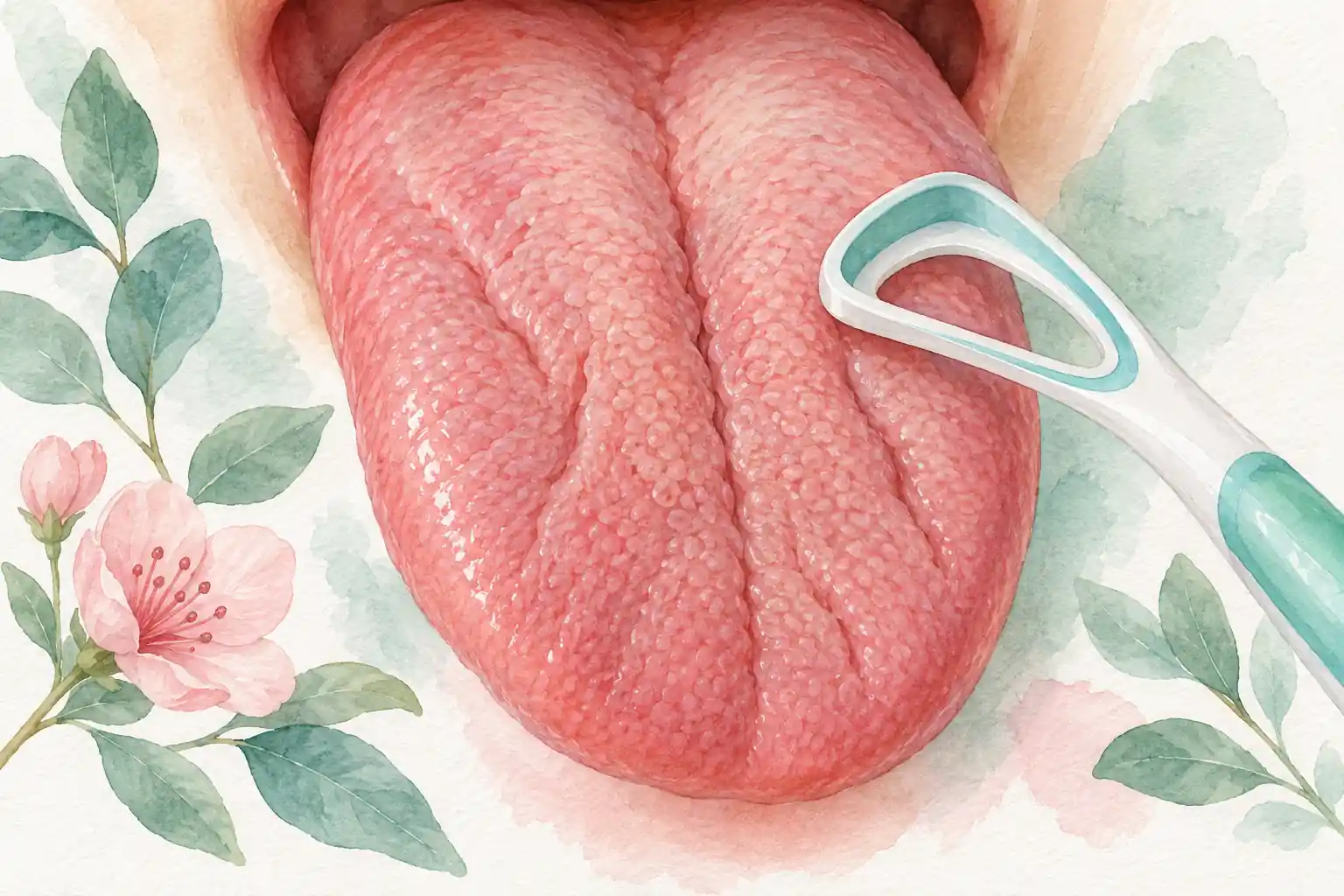
The dentist observes the surface and distribution of the grooves, listens to the history of symptoms and evaluates any associated injuries. The typical picture is clinically recognized; the insights are decided if there are atypical elements, not for the only presence of cracks.
Management and possible care
Choose a delicate gesture
Ask how to use a soft toothbrush or device suitable for the language, without excessive pressure.
Avoid irritating products
Do not add disinfectants or aggressive substances in an attempt to close the grooves.
Reevaluating symptoms
A new burning should not be automatically attributed to the form of the tongue. Describe any changes in products or habits.
Check what changes
Documenting when a injury appears can help the interview, without replacing the direct examination.

What to do at home
Keep oral hygiene and clean the language surface tolerable. Do not introduce toothpicks or other items in the cracks. If a gesture causes pain or bleeding, do not insist: ask for personalized directions.
Dentistry evaluation in Lecce and in depths
In Lecce, an interview with the dental firm Stere can be the starting point for a dental evaluation. Bring useful documentation and describe the concrete problem. Any specialized invitations are distinguished by the performance performed in the study: this page does not attest the availability of any treatment mentioned. See study services and contacts to organize the visit. To deepen the theme, also consult the reference clinical source.
Frequently asked questions
Is the fissured language contagious?
No, it is not transmitted from one person to another.
Do I have to dig in the grooves?
No: the goal is a superficial and delicate cleaning.
Need drugs to close cracks?
Usually not: a benign variant should not be eliminated with drugs.
Is that the same thing as the geographical language?
No, even if the two characteristics can coexist.
When to book a check?
If pain, bleeding, persistent injury or other changes appear.
At Studio Odontoiatrico Stere you can find a complete range of preventive and curative dental treatments.
If you are looking for a dentist in Lecce to improve oral hygiene, prevent caries and gum inflammations or choose home products that suit your needs, the Studio Stere team can accompany you with a customized evaluation. Learn more about Scholarship. it and book your visit to control.
Read more important articles here: Blog
Visit the official website: Study Stereo
Come and visit us: Via Giovanni Boccaccio 19 C/D/E – Lecce
Contact us now for an evaluation.
Follow us on our social media:
Article written by Dr. Nicolò Stefanelli – Dentistry
Published by: Lmao Graphic
"Take Care"
– Studio Stere –
Continue reading
Conoid lateral incisive: how to assess shape, space and restoration | Dentistry study Stere
Pulpotomy in the adult permanent tooth: when to store part of the pulp | Dentistry study Stere
Tooth moved after a shock: because lust requires an urgent visit | Dentistry study Stere
Odontoma: when an obstacle prevents a tooth from popping | Dentistry study Stere