Denti da latte: importanza, cura e caduta | Studio Odontoiatrico Stere
Denti da latte: importanza, cura e caduta | Studio Odontoiatrico Stere
I milk teeth, clinically called deciduous teeth or temporary teeth, are the twenty teeth that make up the first teething of the child and accompany its growth from early childhood to permanent teething. Although they are destined to fall, they perform fundamental biological, functional and aesthetic functions, because they contribute to chewing, language development, the growth of dental arches and the correct eruption of permanent teeth.
One of the most frequent errors among parents is to consider milk teeth less important than the definitive teeth, thinking that it is not necessary to cure them because they will fall. This conviction is not correct and can have consequences on the oral health of the child. I do. Studio Odontoiatrico Stere di Lecce, guided by Dr. Nicolò Stefanelli and from Dr. Rosanna Renò, deals with the oral health of children since early childhood, offering diagnosis, prevention and treatments dedicated to children of Lecce, Salento and Puglia.

When the milk teeth appear
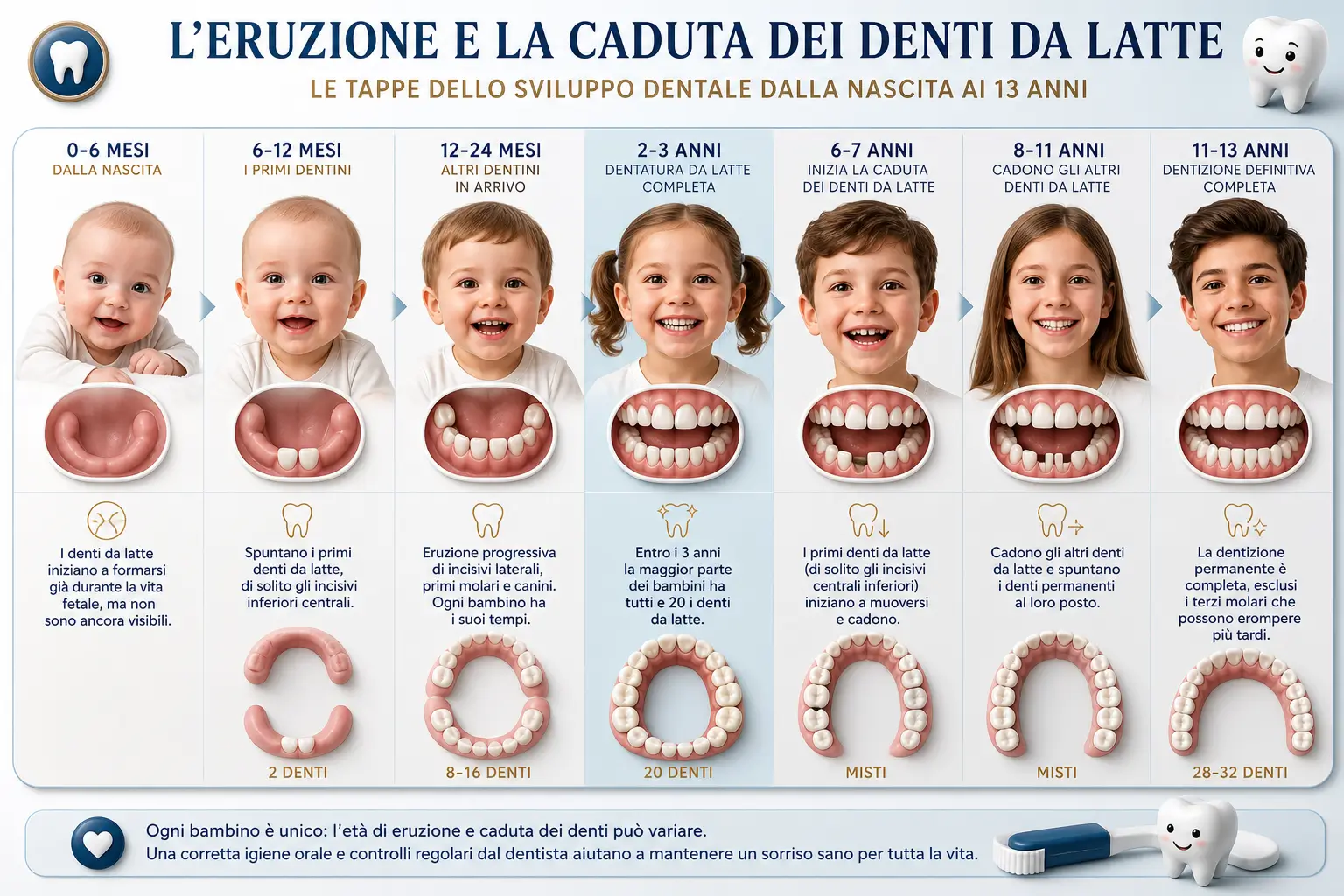
The deciduous teething begins to develop already during the fetal life: the milk teeth teeth teeth gems They form around the sixth week of gestation. The eruption in the oral cable generally occurs between 6 and 12 months of life. The first teeth to appear are usually the lower central incisors, followed by the upper central incisors, the lateral incisors, the first milk molars, the canines and, finally, the second milk molars.
By 2-3 years of age, deciduous teeth are generally complete, with twenty milk teeth present in the arches: ten higher and ten lower. Eruption times may vary from child to child without necessarily indicating a clinical problem. In case of significant delay or doubt about tooth development, an assessment should be made at a dentist.
During the eruption phase, the child can present irritability, abundant salivation, need to bite objects and slight gum discomfort. These signals are often transient and can be handled with personalized indications, avoiding DIY solutions not suitable for the age of the child.
Because milk teeth are fundamental
The function of milk teeth goes beyond simple chewing. Each deciduous tooth plays a precise role in the physical, functional and relational development of the child.
Guide to permanent teeth eruption
Each milk tooth keeps the space in the arch and guides the eruption of the permanent tooth that will grow in its place. When a deciduous tooth is lost too early due to caries, trauma or extraction, the neighboring teeth can move into the empty space, reducing the available space for the definitive tooth and favoring possible disalignment.
Language development
The front milk teeth, especially incisive and canines, contribute to the correct pronunciation of different sounds. Early loss of these teeth may interfere with some stages of language development and require a more careful assessment.
Bone and facial development
The presence of milk teeth stimulates the growth of the alveolar bone and the maxillary structures. Chewing on deciduous teeth helps the harmonious development of dental arches and face.
Chewing, nutrition and serenity of the child
Milk teeth allow the child to chew more effectively different foods and to follow a diet adapted to growth. A healthy smile also contributes to the safety of the child in daily relationships and socialization with peers.
Caries in milk teeth: causes and consequences
Milk teeth caries is one of the most common problems in pediatric age and can be prevented with correct habits, periodic controls and good collaboration between family and dental practice. The main causes include frequent consumption of sugars, sugar drinks, oral hygiene, bacterial transmission from adult to child through shared cutlery or pacifiers and prolonged use of bottle with sugary liquids, especially during sleep.
A caries not treated on a milk tooth should not be underestimated. The infection can reach the dental pulp, cause pain, abscess and involve the surrounding tissues. In the most important cases, it can also interfere with the gem of the underlying permanent tooth. For this reason, even temporary teeth should be checked and cured when necessary. Learn more about the topic on the page dental caries in Lecce.

When the milk teeth fall
The fall of milk teeth generally begins around 6 years of age, often with lower central incisors, and continues progressively until about 12-13 years, when permanent teeth are substantially complete. Even at this stage times can vary from child to child.
The fall of milk teeth occurs through a physiological process of radicular reabsorption. As the permanent tooth below grows and approaches the surface, the root of the milk tooth gradually reabsorbs, until the deciduous tooth loosens and falls naturally.
A milk tooth that does not fall in the expected time may indicate the absence of the underlying permanent tooth, a condition called dental agenesia, or the presence of an obstacle to the normal eruption of the definitive tooth. In these cases a clinical evaluation with digital X-ray may be useful at the Studio Odontoiatrico Stere di Lecce. Learn more about the topic on the page digital dental X-ray in Lecce.
How to take care of milk teeth
The cure of milk teeth begins even before the eruption of the first tooth. The Dr. Nicolò Stefanelli and the Dr. Rosanna Renò recommend to gradually accrue the child to oral hygiene, following appropriate indications at age and its needs.
With the eruption of the first milk tooth, the use of a soft paediatric toothbrush and a quantity of fluoridated toothpaste is introduced at age. The brushing must be performed twice a day, preferably with parent supervision until the child acquires sufficient dexterity and constancy.
The floss can be introduced when the milk teeth begin to touch, so as to remove the plaque from the interdental spaces that the toothbrush fails to reach. The diet must limit the frequent consumption of sugar and sugary drinks, especially out of meals.
Periodic examinations at a dentist in Lecce complete the preventive strategy, allowing you to identify problems early and evaluate preventive treatments such as groove sealing and professional fluoroprophylaxis. Learn more about the topic on the page dental prevention in Lecce.
Treatments for milk teeth at Studio Stere di Lecce
At the Dental Stere Study of Lecce, located in Via Giovanni Boccaccio 19 C/D/E, Dr. Nicolò Stefanelli and the Dr. Rosanna Renò offer treatments dedicated to the health of milk teeth, with a gradual approach, reassuring and suitable for the needs of the young.
Visit of pediatric control
The periodic visit allows to monitor the development of deciduous teething, identify early cavities and occlusal abnormalities, evaluate the eruption of teeth and provide parents with personalized indications on domicile oral hygiene.
Professional dental hygiene
The professional dental hygiene session helps remove plaque and tartar from dental surfaces and along the gum, contributing to the prevention of caries and gums in children. Learn more about the topic on the pageprofessional dental hygiene in Lecce.
Sealing of the grooves
Sealing of the occlusal grooves of milk molars is a rapid and generally well tolerated preventive treatment, indicated in children with greater risk of caries or with particularly deep dental grooves.
Fluoroprofilament
The professional application of fluoride, when indicated, can help to strengthen the enamel of milk teeth and promote the remineralization of the initial lesions.
Treatment of deciduous caries
Milk teeth caries are treated with materials compatible with pediatric needs and carefully to the comfort of the child. In cases of deep caries with pulpal involvement, the clinical assesses the most suitable treatment, trying to preserve the tooth when possible.
Space extraction and maintenance
When a milk tooth is no longer recoverable clinically, extraction is carefully evaluated. In cases where the premature loss of the tooth may affect the space for the permanent tooth, a space maintainer may be indicated.
FAQs about milk teeth in Lecce
When do milk teeth come out?
The first milk teeth generally erode between 6 and 12 months of life, beginning with the lower central incisors. Within 2-3 years, the deciduous teeth is complete and consists of twenty teeth.
Should milk teeth be cured even if they fall?
Yes. Milk teeth maintain the space for permanent teeth, guide their eruption and support the chewing, language and development of the arches. Untreated caries can cause pain, infections and possible consequences on the underlying permanent tooth.
When do milk teeth fall?
The fall usually begins around 6 years and continues until about 12-13 years, when permanent teething is substantially complete.
What to do if a milk tooth does not fall?
If a milk tooth does not fall in the expected time, a dental evaluation should be made. A digital X-ray can help verify the presence of the permanent tooth and its correct position.
What to do if a child loses a milk tooth due to trauma?
In case of trauma with loss of a milk tooth, it is important to bring the child to the dentist as soon as possible. Unlike permanent teeth, milk teeth are usually not replanted, but it is necessary to assess any damage to the underlying tissue and permanent tooth.
How do milk teeth care at home?
Milk teeth are treated with brushing twice a day, age-appropriate fluoride toothpaste, sugar control, use of the floss when indicated and periodic visits to the dentist.
What is caries from bottle?
Caries from bottle is a form of deciduous caries linked to the frequent exposure of teeth to sugary liquids, especially during sleep. It can prematurely affect the upper front teeth and must be prevented with correct habits.
When to start taking the child to the dentist?
It is advisable to schedule the first dental visit within the first year of life or within a few months of the first tooth eruption, so as to set a correct prevention from the beginning.
Does the sealing of the grooves also occur on milk teeth?
Yes, when indicated. Sealing can be useful in children with greater risk of caries or with milk molars characterized by deep grooves.
How much does the child visit from the dentist in Lecce?
At Studio Stere di Lecce a detailed and transparent quote is provided during the first visit. For information: Scholarship. it.
At Studio Odontoiatrico Stere you can find a complete range of preventive and curative dental treatments.
If you are looking for a dentist in Lecce for dental prevention, in Salento or Puglia, our team is ready to welcome you with expertise, technology and attention to detail. Learn more about studiostere.it and book your check-up today.
Article written by Dr. Nicolò Stefanelli – Dentistry

Read more important articles here: Blog
Visit the official website: Study Stereo
Come and visit us: Via Giovanni Boccaccio 19 C/D/E – Lecce
Follow us on our social media:
Article written by Dr. Nicolò Stefanelli – Dentistry
Continue reading
Dentiera rotta: rimedi da evitare prima della valutazione | Studio Odontoiatrico Stere
Sports bite and mouthguards: differences and why they are not interchangeable | Dentistry study Stere
Tattoo from amalgam: how to evaluate a gray spot in the mouth | Dentistry study Stere
Twin teeth and melted: because a tooth can look double | Dentistry study Stere