Milk tooth returned after a bump: why should not be pulled | Dentistry study Stere
Milk tooth returned after a bump: why should not be pulled | Dentistry study Stere
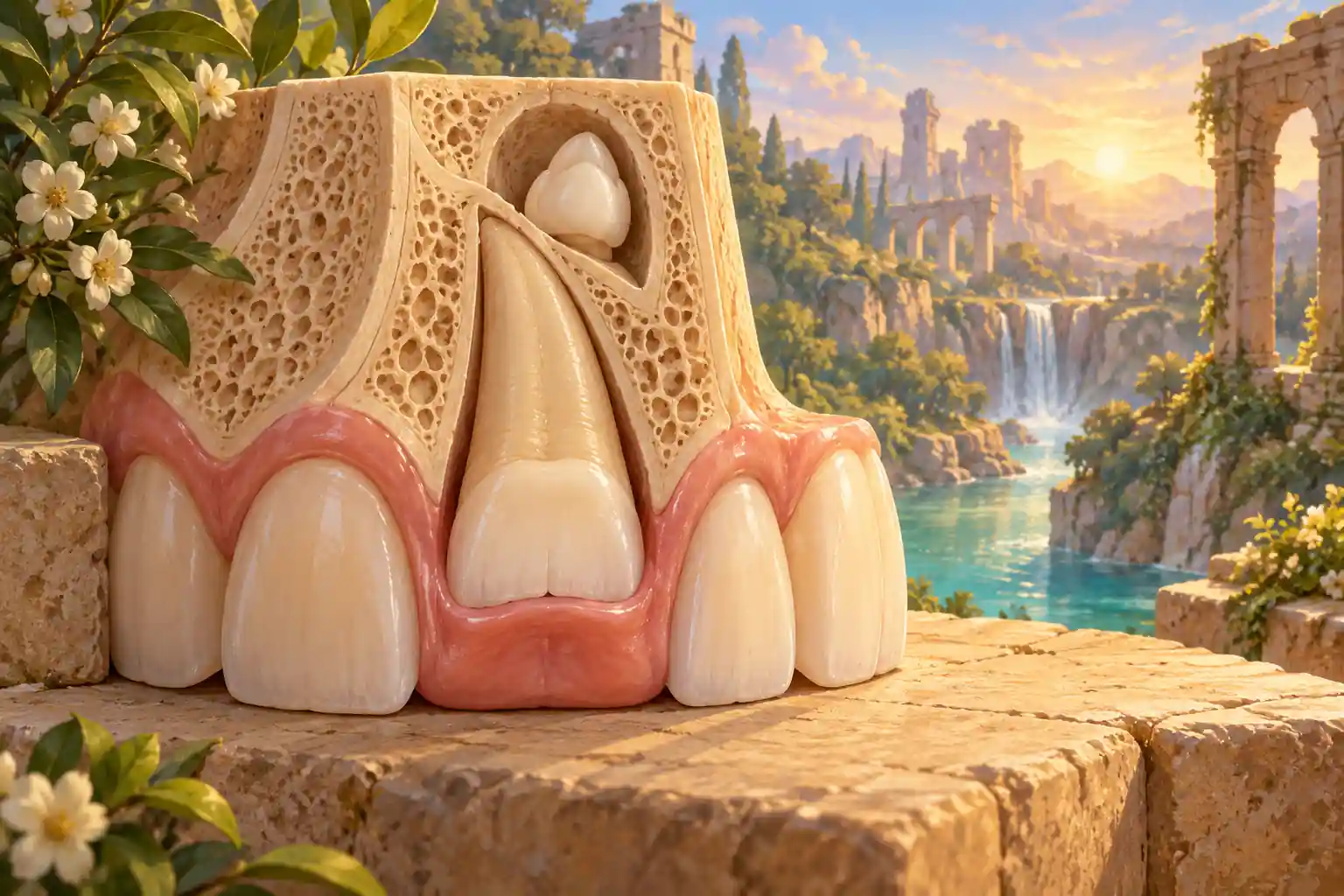
After a fall a milk incisive may seem shorter, almost disappeared in the gum. It could have been pushed into the hive: the name of trauma is intrusion.
Don't try to pull it, straighten it or bring it back. The path for a milk tooth is different from the one for a permanent tooth.
Contact a dentist promptly and report when and how the shock occurred, along with other symptoms of the child.

What is the intrusion of a milk tooth
It is the shift of the tooth to the inside of the bone that supports it. The crown can still be visible only in part. The visit distinguishes intrusion from tooth loss or other injury.
Causes and factors to consider
Impact management
A direct force along the tooth can push it into the hive. Dynamics helps guide the exam.
Age of the child
The age and development of teeth count in the evaluation, together with the ability of the child to collaborate.
Relationship with permanent
Near the root of the milk tooth the permanent successor develops: this relationship should also be considered.
Associated injuries
Lips, gums and other teeth can be involved. Do not focus all attention on the only shortest incisive.

What to observe after the shock
Report pain, bleeding, difficulty closing the mouth or a tooth no longer visible. If the trauma involves the head and the loss of consciousness, repeated vomiting or unusual drowsiness appear, it serves urgent medical care.
A back tooth is not a fallen tooth
Do not look under the gum with fingers or tools. It is important to determine where the tooth is and if fragments are missing; this evaluation is for the professional, who decides even if there are radiographic images.
The first dental evaluation
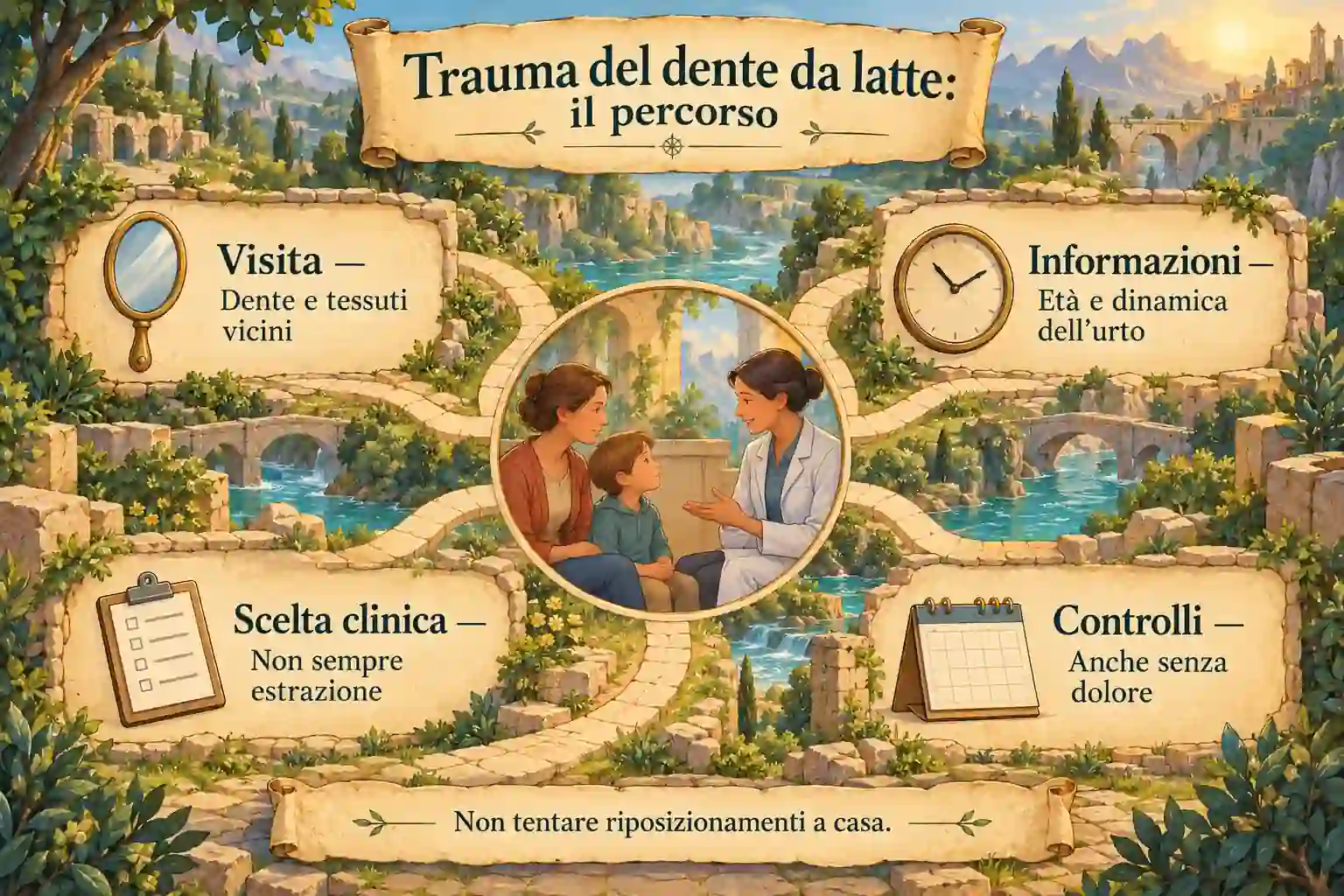
The dentist examines tissues and records trauma. He asks for information about the health of the child and the circumstances of the accident, so he explains the options and controls. A photo does not replace this visit.
Management and possible care
Do not manipulate
Leave the tooth in the position it is located until the evaluation. Do not apply tractions or pressures.
Note when indicated
For many intruder milk teeth the path provides spontaneous repositioning under control, not a domestic manoeuvre.
Intervention if necessary
The choice depends on the clinical picture and complications. Extraction is not an automatic conclusion for each intrusion.
Programming the following
Controls are used to verify healing, tooth position and possible effects on permanent successor.
Daily care after visit
Follow the indications received on hygiene, nutrition and activity. Tell the dentist if swelling, pus, growing pain or other changes appear. Do not start antibiotics or pharmacological collutors on your initiative.
The dental path to Lecce
For pediatric trauma to Lecce, he communicates to Studio Stere the age of the child and the appearance of the tooth. The site includes paediatric dentistry among the services; availability and urgency of the case should be agreed directly.
For information: contacts of the Studio Stere.
Detailed sources consulted on 5 October 2026: onlinelibrary. Wiley. Community, Kch.nhs. uk.
Frequently asked questions
If he seems missing, he certainly fell?
No. It could be returned to the hive: an evaluation is needed to distinguish it from a lost tooth.
Can I get him out with my fingers?
No. Do not attempt tractions or repositionings with fingers or tools.
Is it always extracted?
No. In many cases, spontaneous repositioning is followed, but the dentist defines the path.
Can it affect the permanent tooth?
Yes, trauma can have consequences on the successor in development, to be evaluated and followed over time.
Do they need pain-free controls?
Yes. The absence of pain does not make the scheduled controls useless.
At Studio Odontoiatrico Stere you can find a complete range of preventive and curative dental treatments.
If you are looking for a dentist in Lecce to improve oral hygiene, prevent caries and gum inflammations or choose home products that suit your needs, the Studio Stere team can accompany you with a customized evaluation. Learn more about Scholarship. it and book your visit to control.
Read more important articles here: Blog
Visit the official website: Study Stereo
Come and visit us: Via Giovanni Boccaccio 19 C/D/E – Lecce
Contact us now for an evaluation.
Follow us on our social media:
Article written by Dr. Nicolò Stefanelli – Dentistry
Published by: Lmao Graphic
"Take Care"
– Studio Stere –
Continue reading
Conoid lateral incisive: how to assess shape, space and restoration | Dentistry study Stere
Pulpotomy in the adult permanent tooth: when to store part of the pulp | Dentistry study Stere
Tooth moved after a shock: because lust requires an urgent visit | Dentistry study Stere
Odontoma: when an obstacle prevents a tooth from popping | Dentistry study Stere