Dental autotransplantation: when assessing the shift of a natural tooth | Dentistry study Stere
Dental autotransplantation: when assessing the shift of a natural tooth | Dentistry study Stere
To replace a missing tooth we often talk about implants and implants. In selected cases, the movement of a natural tooth of the same person may also be assessed.
This procedure is called dental autotransplantation. It requires a suitable donor tooth and a project that considers both locations.
It is not a solution available for any empty space: indication, skills and specialist controls are decisive.
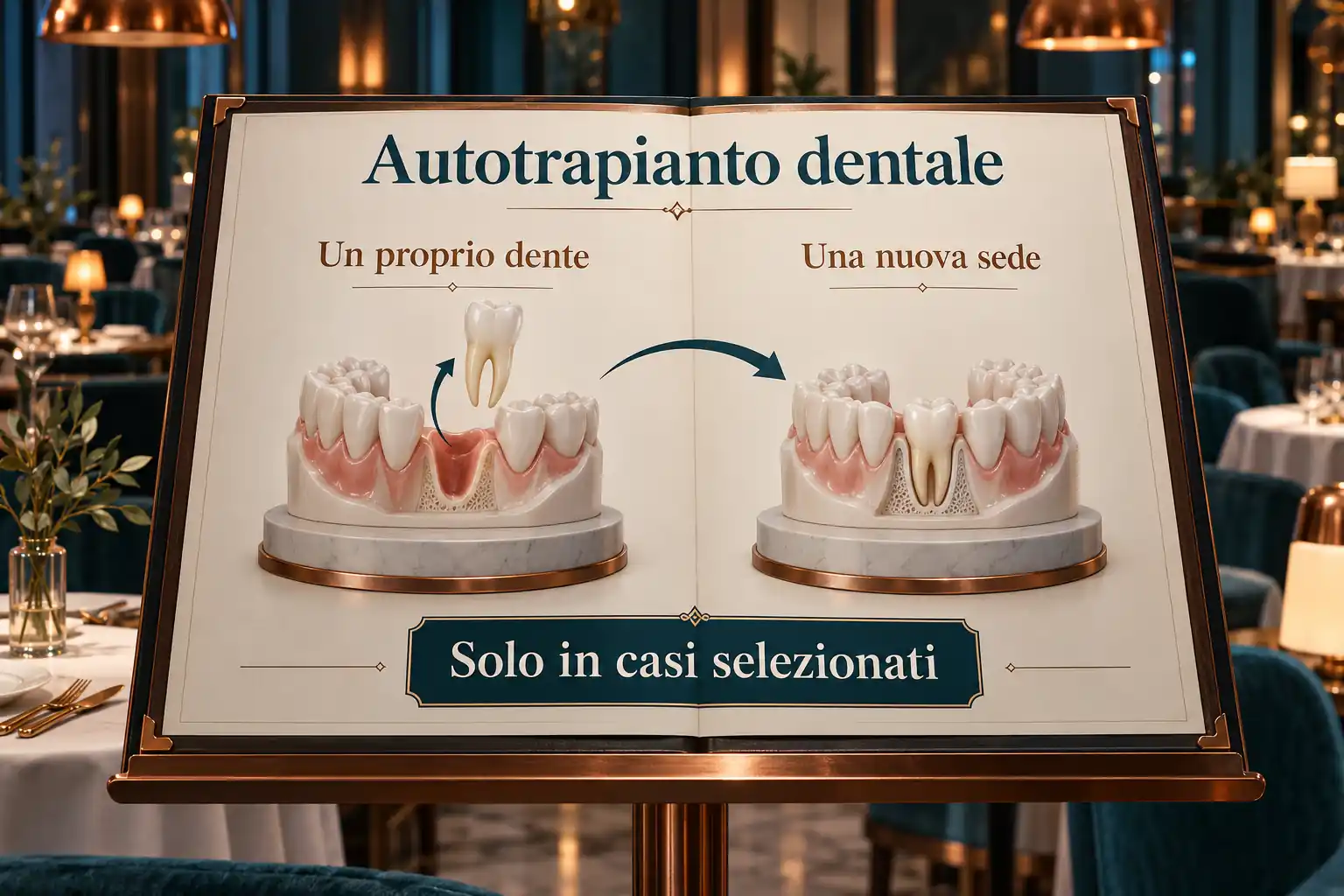
What is dental autotransplantation
It is the programmed surgical transfer of a tooth in a different location in the mouth of the same patient. It can be considered in certain rehabilitations, even during growth, without guaranteeing an equal result in each situation.
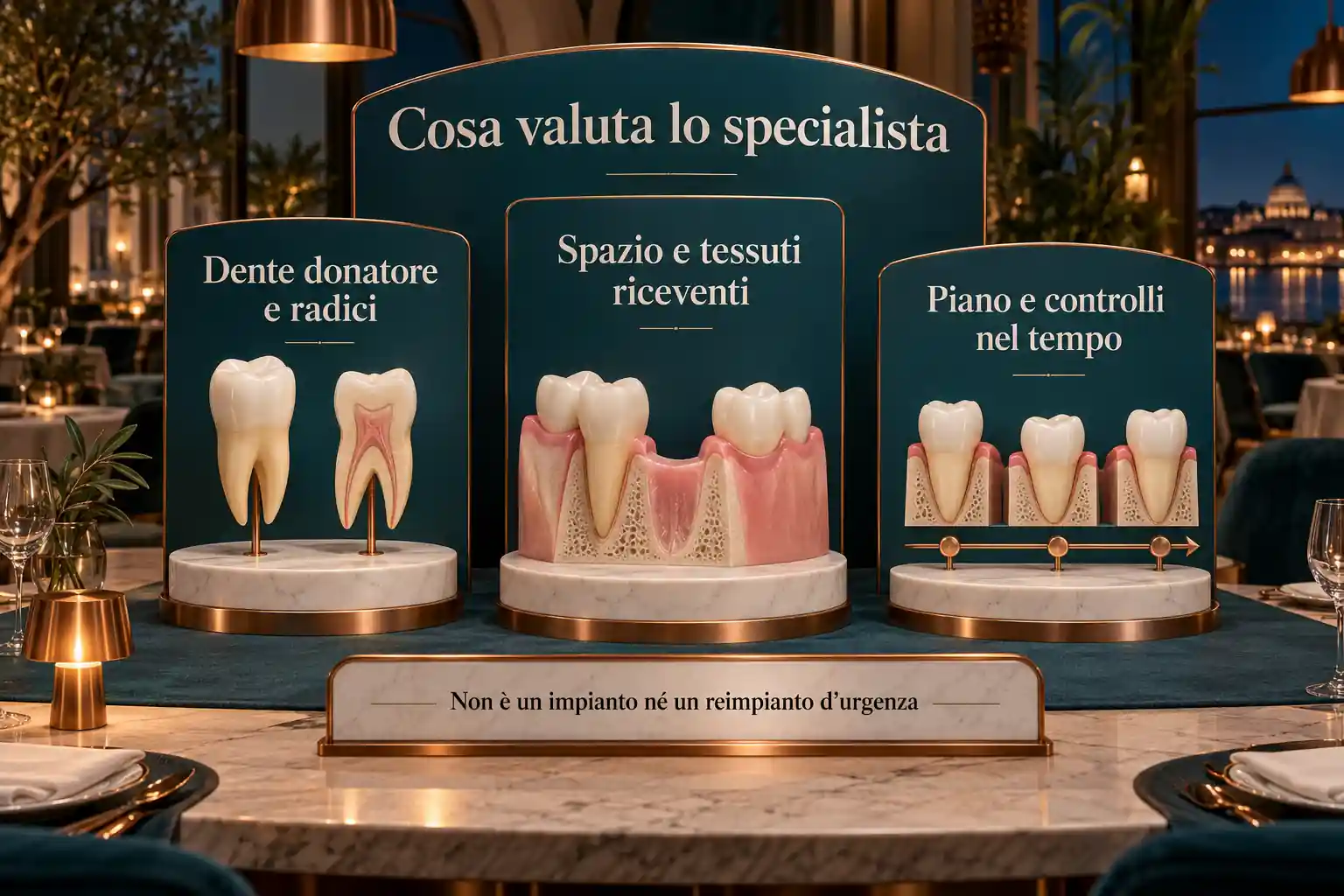
Factors that make the case currencyable
An appropriate donor
Form, condition and position of the tooth to move must be compatible with the overall project.
The receiving seat
Space, fabrics and local conditions affect the possibility of welcoming and maintaining the tooth.
Development of roots
The degree of radicular maturation affects the plan and the management of the pulp after transfer.
Coordination of care
Surgery, orthodontics and rehabilitation must be planned together, considering also growth.
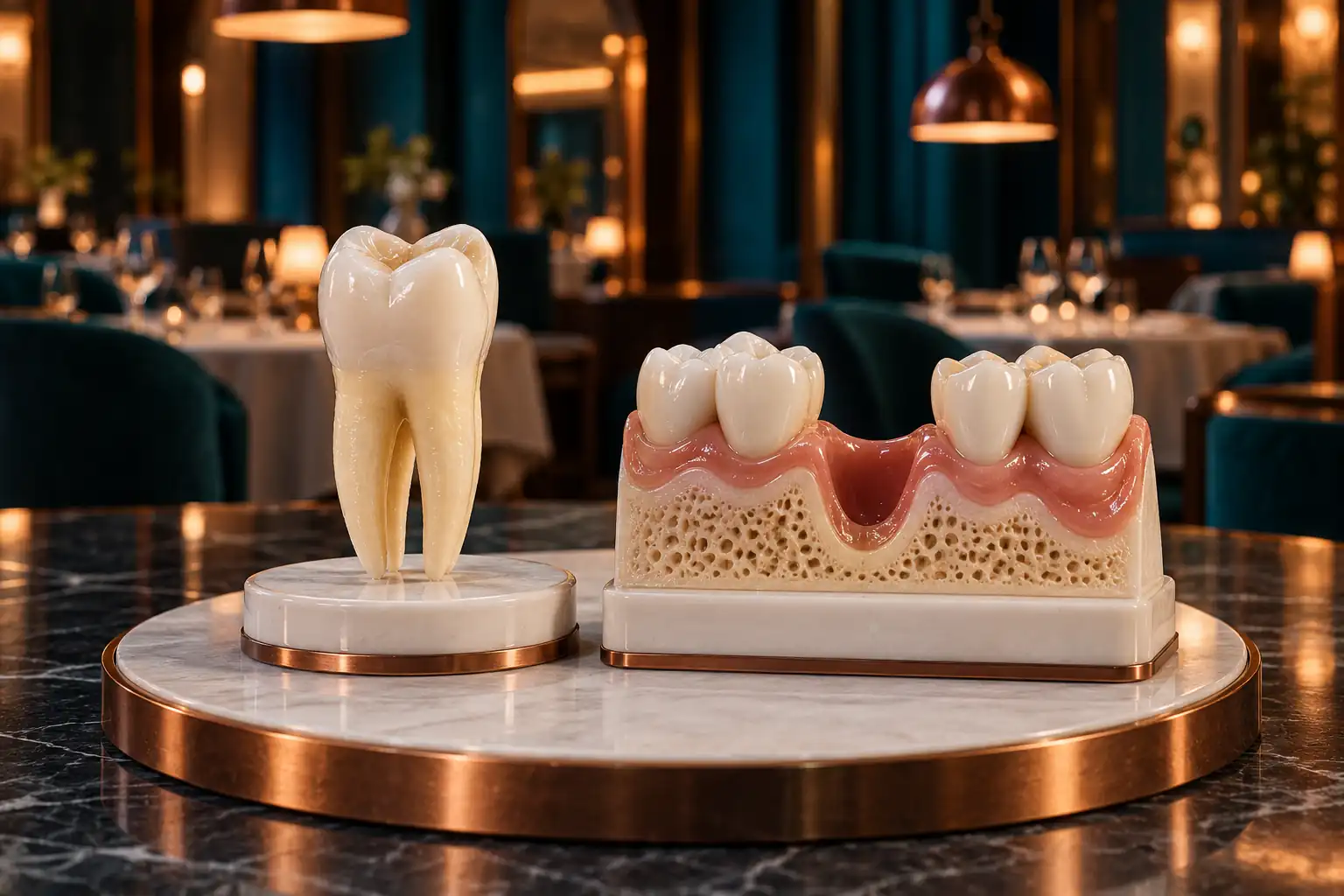
When it makes sense to ask the question
If a tooth lacks or has unfavorable prognosis, especially in a growing patient, you can ask what options are realistic. A useful element should not be extracted only to provide a donor without a specialist plan.
Autotransplantation, plant and replantation
The plant uses artificial support. In the replanting after an avulsion, the tooth is repositioned for trauma. The autotransplant is instead a planned transfer: it does not replace the emergency instructions for a tooth just lost.
For a related topic: Side incisors.
How the indication is studied
The healing group assesses dentature, growth, locations and alternatives. The investigations are chosen in relation to the case. Risks, duration of the route and possible additional treatments should be discussed, avoiding generic percentages presented as a personal forecast.
A path that continues after surgery
Define alternatives
The comparison includes temporary, orthodontic and prosthetic solutions appropriate to age and condition.
Plan your transfer
The procedure requires attention to the tissues of the root, important for healing.
Follow pulp and root
Necrosis, reabsorbments or even complications are possible. Canalar treatment depends on the picture.
Complete rehabilitation
Position, shape and function may require further steps. The presence of the tooth is not enough to define success alone.
Information to store
Collect reports and previous useful images and ask who will coordinate the controls. After an intervention, follow the custom instructions and report changes, without trying to move the tooth to verify its stability.
Ask for an evaluation in Lecce
A visit to STERE can frame the missing tooth and rehabilitation options. The autotransplant requires a specialized path: it is not presumed to be disbursed at the study in the absence of a specific confirmation.
To organize the visit consult the contacts of the Studio STERE.
Sources consulted on 19 October 2026: Health Research Authority; British Orthodontic Society.
Frequently asked questions
Is the tooth of another person used?
No. The donor belongs to the same person.
Is that the same thing as a plant?
No. A natural tooth is transferred to the autotransplant.
Is it possible in every patient?
No. We need suitable conditions and a specialist project.
Should the tooth always be detached?
Not in any case: radicular development and pulpy conditions direct management.
Does the control end after surgery?
No. Overtime surveillance is part of the treatment.
At Studio Odontoiatrico Stere you can find a complete range of preventive and curative dental treatments.
If you are looking for a dentist in Lecce to improve oral hygiene, prevent caries and gum inflammations or choose home products that suit your needs, the Studio Stere team can accompany you with a customized evaluation. Learn more about Scholarship. it and book your visit to control.
Read more important articles here: Blog
Visit the official website: Study Stereo
Come and visit us: Via Giovanni Boccaccio 19 C/D/E – Lecce
Contact us now for an evaluation.
Follow us on our social media:
Article written by Dr. Nicolò Stefanelli – Dentistry
Published by: Lmao Graphic
"Take Care"
– Studio Stere –
Continue reading
Imperfect Dentinogenesis: Protect teeth that are consumed soon | Dentistry study Stere
Orthodontic Minivitis: why they serve and how to follow them over time | Dentistry study Stere
Sjögren and oral health: organizing prevention with caregivers | Dentistry study Stere
Conoid lateral incisive: how to assess shape, space and restoration | Dentistry study Stere